
By Bilesanmi Abayomi
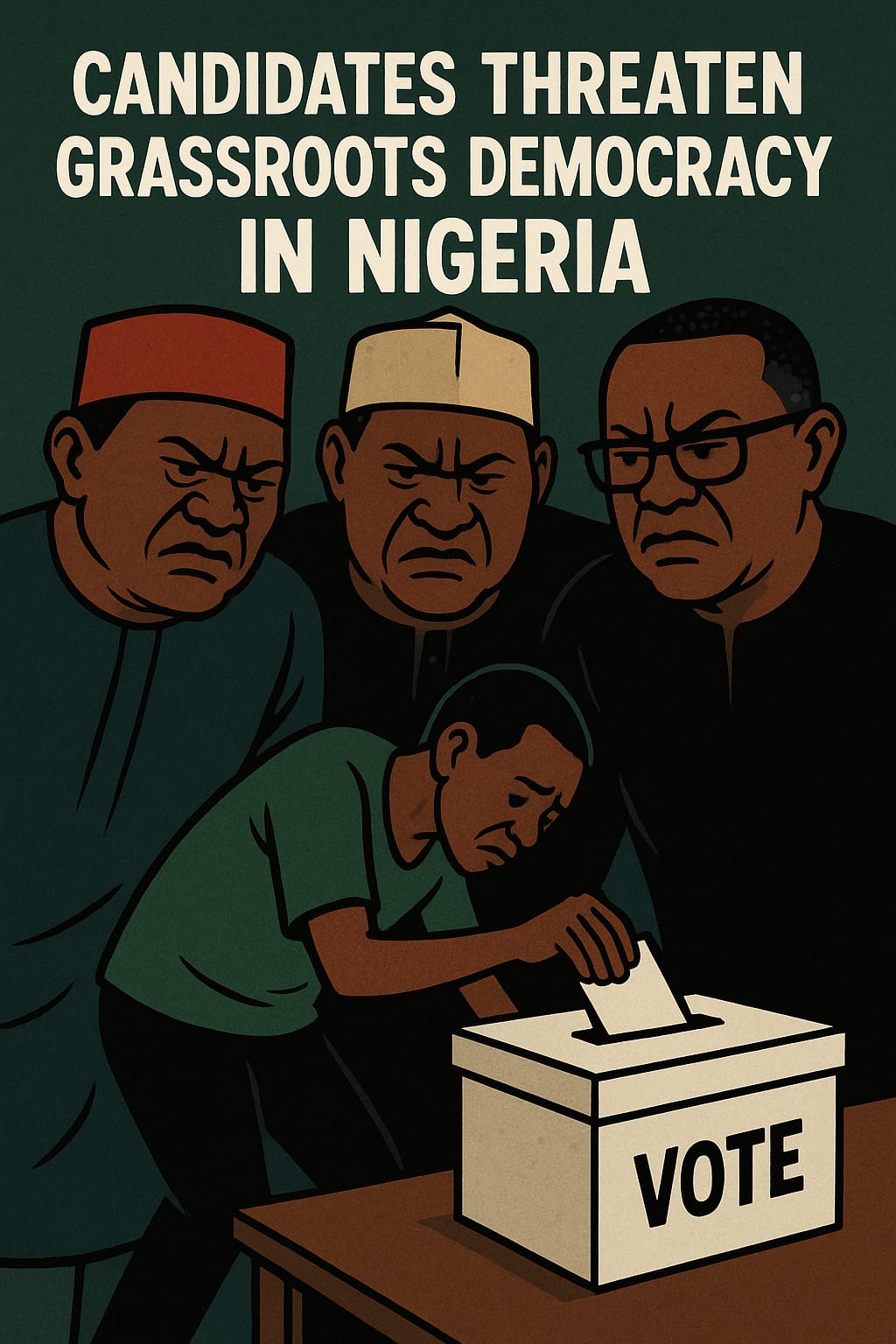
As Nigeria prepares for another round of local elections, a growing number of party loyalists and community stakeholders are raising concerns over an age-old yet persistent threat to grassroots democracy — the imposition of candidates.
Often overlooked in national discourse, this practice sees political elites handpick candidates for elective positions, sidelining party members and bypassing internal democratic processes. While it may seem routine in the corridors of political power, observers say its implications for local governance and democratic integrity are anything but ordinary.
Widening Gap Between Communities and Candidates
At the heart of local politics is a simple expectation: that elected representatives should reflect the lived realities of their communities. From street-level familiarity to shared struggles, grassroots governance thrives on deep local ties.
However, imposed candidates — often perceived as outsiders — rarely enjoy such connections. They are frequently seen as “political parachutes,” dropped into constituencies to fulfill strategic calculations, reward loyalty, or balance internal party factions. This disconnect fuels suspicion among voters and breeds quiet resistance within the party.
“We need leaders who know our problems, not strangers sent from Abuja or the state capital,” said Amina Salisu, a community organizer in Kaduna. “When the people don’t choose their leaders, they lose trust in the entire process.”
Deflating Party Morale
The fallout from candidate imposition often begins within party ranks. Grassroots members — those who organize rallies, canvass neighborhoods, and fundraise locally — are frequently demoralized when their efforts are overlooked in favor of elite decisions.
Political analysts warn that this erosion of morale has tangible effects. Disillusioned party members may withhold support, fuel internal sabotage, or even defect to rival parties. The imposed candidate, lacking both grassroots legitimacy and on-the-ground structure, often struggles to gain traction — leading to poor electoral performance, even in supposed party strongholds.
Rising Backlash and Independent Campaigns
Communities aren’t taking the trend lying down. In recent elections, several constituencies have witnessed community-backed aspirants launching independent campaigns in defiance of party decisions. These breakaway movements have sometimes resulted in surprise victories, sending a clear message to party leaders.
“This is not just about politics — it’s about dignity,” said Chinedu Okafor, who lost a local primary in Anambra State but went on to win as an independent candidate. “People are tired of being dictated to.”
A Threat to Democratic Culture
Beyond electoral outcomes, the long-term danger lies in the erosion of public confidence in democracy. When voters perceive that their voices don’t count — not even within their own parties — disengagement becomes inevitable. In local governments already plagued by weak institutions and poor service delivery, this lack of trust can deepen governance failures.
Political observers warn that if the culture of imposition continues unchecked, it could jeopardize efforts to strengthen democratic participation at the grassroots — where governance is most intimate and impactful.
Restoring Trust in the Process
To reverse the trend, political parties must recommit to transparency and internal democracy. This includes conducting credible primaries, involving local party structures in candidate selection, and ensuring that community voices are respected.
“Imposition may offer short-term political gains, but it does nothing to build the long-term loyalty and legitimacy that democracy requires,” said Dr. Musa Ibrahim, a political science lecturer at the University of Ilorin. “Nigeria’s democratic future depends on what happens at the grassroots.”
As political stakeholders continue to jostle for influence, the need for reform has never been clearer. Strengthening local democracy, experts say, begins with giving the people a real say in who represents them.