
By Bilesanmi Abayomi
How unruly passengers, alcohol, and poor enforcement threaten air travel safety
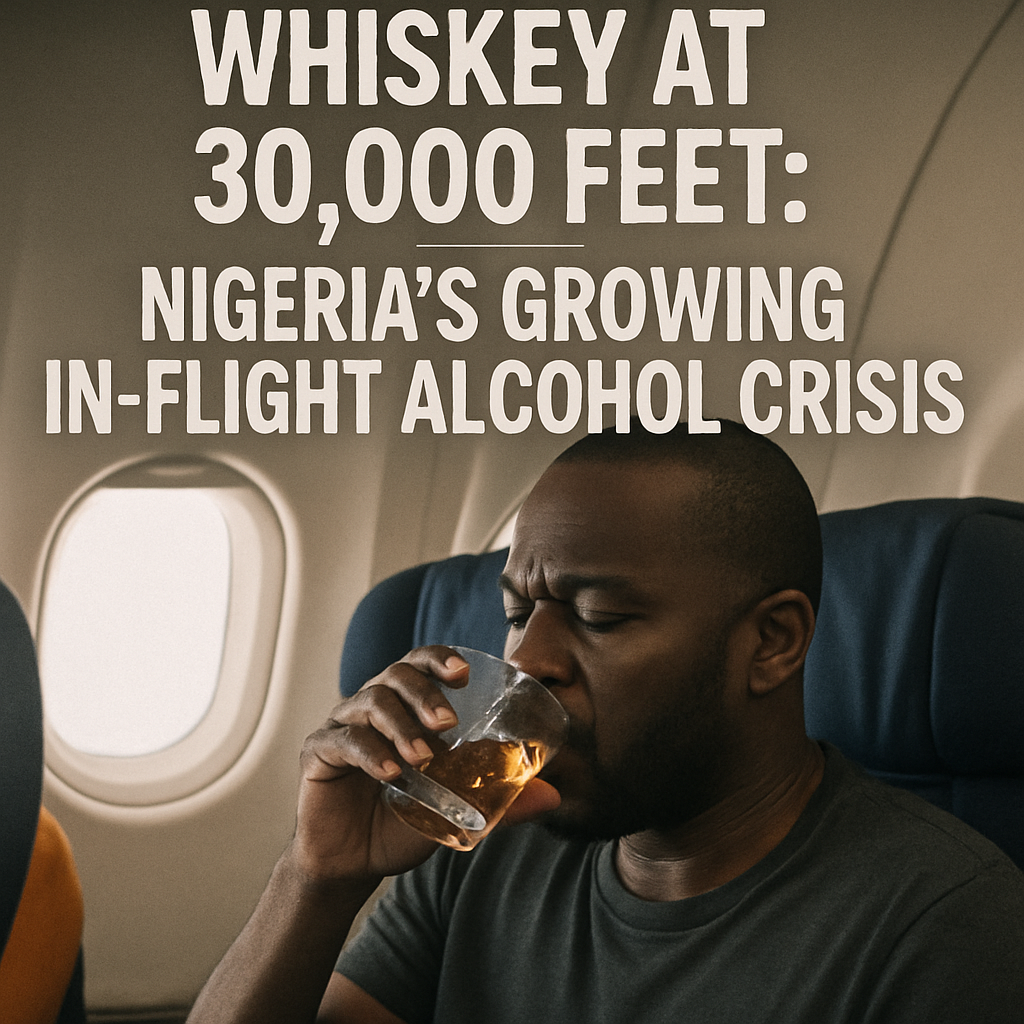
When John boarded a domestic flight from Lagos to Abuja with a bottle of whiskey tucked inside his carry-on, he had no idea his decision would cause the aircraft to return to the terminal. Moments after takeoff, and already tipsy from pre-boarding drinks, John grew loud, aggressive, and uncooperative. His behavior delayed the flight, disrupted over 120 passengers, and ended with his arrest by airport security.
Unfortunately, John’s case is not an isolated one.
As domestic air travel increases across Nigeria, aviation authorities and airlines are sounding the alarm over a spike in alcohol-fueled in-flight disturbances — prompting urgent warnings and calls for stricter enforcement.
A Brewing Problem at 30,000 Feet
Whether from pre-flight excitement, travel stress, or celebration, some passengers are turning to alcohol for relief or recreation. But what feels harmless on the ground can become a serious safety issue in the sky.
“People don’t realize how dangerous alcohol becomes in a pressurized cabin,” says retired pilot Captain Musa Idris. “At high altitudes, oxygen levels drop, and alcohol hits harder. It impairs coordination, judgment, and reaction time—three things you definitely need in an emergency.”
While passengers can carry alcohol onboard under specific conditions, Nigerian aviation regulations prohibit consuming any alcohol not served by airline staff. Enforcement, however, remains patchy—particularly on busy domestic routes where security checks are often rushed.
From Minor Disruption to Major Emergency
The consequences of ignoring these rules can be serious.
In 2023, an Air Peace flight from Lagos to Port Harcourt was delayed after an intoxicated passenger began harassing crew members and trying to access the cockpit. The crew intervened in time, but the flight was delayed for over an hour, and the passenger was detained.
“We treat every incident as a potential security threat,” said an airline official at Lagos’ Murtala Muhammed International Airport. “One drunk passenger can distract the crew, incite panic, or compromise critical safety procedures.”
Legal Consequences: Fines, Arrests, and No-Fly Lists
Nigeria’s Civil Aviation Act and Aviation Offences Regulations classify such behavior as a serious violation. Offenders face fines, arrest, and blacklisting from future flights.
According to a spokesperson from the Nigerian Civil Aviation Authority (NCAA), passengers are expected to be fit to travel. “No airline is obligated to carry a person who poses a safety risk to others. We are intensifying surveillance and empowering crew to report and respond to misconduct.”
Cabin Crew on the Frontlines
Flight attendants, often the first to face unruly behavior, are calling for tighter regulations.
Funmi Oladipo, a cabin crew member with a local airline, shared her experience:
“We once had a man sneak in a small bottle of gin. Mid-flight, he started shouting and threatening other passengers. We had to restrain him until we landed. People don’t understand—we’re not just here to serve food. We’re trained for emergencies, too.”
Awareness Gap Still Wide
Despite repeated incidents, public awareness remains low. Many passengers believe drinking their own alcohol on board is allowed—or at worst, harmless.
Advocacy groups are now pushing for clearer signage, public service announcements, and stronger airport messaging to educate travelers before boarding. Experts also suggest pre-flight briefings should explicitly mention the alcohol policy and its consequences.
A Call for Responsible Flying
As Nigeria’s aviation sector expands, the burden of keeping the skies safe falls on all parties: regulators, airlines, and passengers.
Bringing alcohol onto a plane may seem like a minor infraction. But in the wrong context, it can turn into a full-blown crisis. At 30,000 feet, there’s no room for recklessness — and nowhere to escape.
Let the cabin be a place for calm, not chaos. The sky is no place for spirits.