
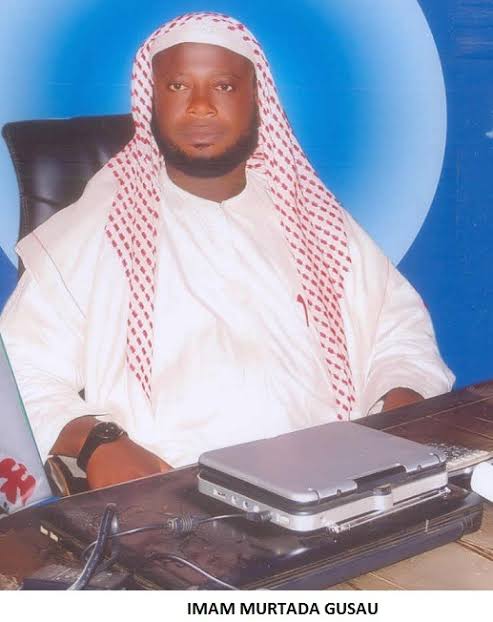
By Imam Murtadha Gusau-Okene
In the name of Allah, Most Merciful, the Bestower of Mercy.
All praise is due to Allah, the Lord of all creation, may Allah extol the mention of our noble Prophet Muhammad (Peace be upon him) in the highest company of Angels, bless him and give him peace and security―and his family, his Companions and all those who follow him correctly until the establishment of the Hour.
Dear brothers and sisters! The idea that “justice brings peace” is a well-established concept, often articulated as “if you want peace, work for justice.” This implies that true and lasting peace is not simply the absence of conflict, but rather the result of addressing the root causes of conflict, which often involve injustice, inequality, and oppression.
Injustices like systemic inequality, discrimination, marginalisation and lack of access to resources can fuel resentment and anger, leading to conflict.
When people feel that they are treated fairly and have equal opportunities, they are more likely to cooperate and live in harmony.
Justice systems that are fair and impartial help to build trust between individuals, communities, and governments.
When people feel safe and protected from harm, they are more likely to engage in peaceful activities and relationships.
In situations of conflict, justice can play a role in facilitating reconciliation by acknowledging past wrongs and holding perpetrators accountable.
The connection between justice and peace is not just theoretical. Throughout history, movements for social justice have often been linked to efforts to create lasting peace. For example, the Civil Rights Movement in the United States aimed to achieve racial equality and justice, which was seen as essential for creating a more peaceful society. Similarly, the concept of restorative justice focuses on repairing the harm caused by crime and wrongdoing, which can lead to healing and reconciliation within communities.
While justice is crucial for peace, it is important to note that it is not a simple or straightforward process. It requires ongoing effort and commitment from individuals, communities, and governments to address the root causes of injustice and work towards creating a more just and peaceful world.
Respected brothers and sisters! Know that the quest for peace is among the primary focus of Prophet Muhammad (Peace be upon him)’s mission to humanity.
Along with establishing peace in society, the teaching of Prophet Muhammad (Peace be upon him) also emphasised the importance of establishing justice. Justice is paramount in the Islamic faith. Islam will always stand for justice and any path that deviates from it can never be part of Islam. Imam Ibn Qayyim al-Jawziyah mentioned in a popularly quoted statement in his book I’lam al-Muwaqqi’in an-Rabbil Aalamin:
“The Islamic Shari’ah is founded upon wisdom and welfare for the servants in this life and the afterlife. In its entirety, it is justice, mercy, benefit, and wisdom. Every matter which abandons justice for tyranny, mercy for cruelty, benefit for corruption, and wisdom for foolishness is not a part of the Islamic Shari’ah even if it was introduced therein by an interpretation.”
Allah the Most High says in the Quran:
“O believers! Enter into Islam wholeheartedly and do not follow Satan’s footsteps. Surely he is your sworn enemy.” [Qur’an, 2:208]
Indeed, the Qur’an emphasised that peace is an essential value of Islam. The term “Islam” is derived from the same root word, “salam” which means peace. The Messenger of Allah (Peace be upon him), in inviting his people to accept his message, did so through peaceful means and beautiful preaching.
Allah the Almighty says in the Qur’an:
“Invite to the way of your Lord with wisdom and good instruction, and argue with them in a way that is best. Indeed, your Lord is most knowing of who has strayed from His way, and He is most knowing of who is [rightly] guided.” [Qur’an, 16:125]
Prophet Muhammad (Peace be upon him) taught us that when we are faced with aggression and intolerance, we should respond with peace.
Allah the Almighty says in the Qur’an:
“And the servants of the Most Merciful are those who walk upon the earth easily, and when the ignorant address them [harshly], they say [words of] peace.” [Qur’an, 25:63]
Allah the Most High is the Most Merciful and His mercy encompasses all things. One of the ways to attain His mercy is to show mercy to all humankind.
Our beloved Prophet Muhammad (Peace be upon him) reminded us in a Hadith:
“Allah will not be merciful to those who are not merciful to humankind.” [Al-Bukhari]
Being Muslims, we are commanded to be just at all times. We should avoid any form of injustice and acts that harm others. Being just is the closest to piety and is part of being Allah-conscious. Allah the Almighty says in the Qur’an:
“O you who believe, stand up as witnesses for Allah in all fairness and do not let the hatred of a people deviate you from justice. Be just: This is closest to piety, and beware of Allah. Surely Allah is aware of all you do.” [Qur’an, 5:8]
Islam is against any form of injustice and violence. Allah the Most High clearly forbids these in the Qur’an:
“O you who have believed, do not consume one another’s wealth unjustly, but only [in lawful] business by mutual consent. And do not kill yourselves [or one another]. Indeed, Allah is to you ever Merciful.” [Qur’an, 4:29]
If one is subjected to any form of injustice, the oppressed person is entitled to defend and gain his/her freedom. Allah the Almighty mentions in the Qur’an:
“Yet indeed, as for any who defend themselves after having been wronged – no blame whatever attaches to them.” [Qur’an, 42:41]
Sometimes, the news that we read online or happenings that we see around us can make us feel angry, upset and hopeless. However, let’s not despair. We all play a part in creating the kind of world we want to live in. In every aspect of our lives and multiple roles that we play, let us strive to be peaceful, kind and inclusive and promote justice for all.
Beloved brothers and sisters! The quote “If you want peace, work for justice” emphasises the intrinsic link between peace and justice, suggesting that true and lasting peace cannot exist without addressing the root causes of conflict and inequality. It highlights that peace is not merely the absence of war or violence, but a state of harmony and well-being that requires a commitment to social justice and the well-being of all individuals.
The quote is attributed to Pope Paul VI and was first used in his 1972 World Day of Peace message, and it’s a true quote. He emphasised that working for peace requires a “greatness of soul” and a willingness to sacrifice personal interests for the common good. This includes respecting human dignity, eliminating threats to human dignity, and ensuring access to basic necessities.
This idea is rooted in the Islamic and Catholic social teachings, which views peace as more than just the absence of war, but as a positive state of social well-being that is achieved through addressing the root causes of conflict and inequality. This includes promoting reconciliation, anti-racism, peacebuilding, and addressing the needs of the poor, needy, less privileged, impoverished and oppressed.
Wassalamu alaikum wa rahmatullah wa bara ka tuh
And all praise is for Allah, Lord of the Worlds; and may the peace and blessings of Allah be upon the noble Prophet, his family, his Companions and all who follow him until the Day of Resurrection.
Murtadha Muhammad Gusau is the Chief Imam of Nagazi-Uvete Jumu’ah and the late Alhaji Abdur-Rahman Okene’s Mosques, Okene, Kogi State, Nigeria. He can be reached via: gusauimam@gmail.com or +2348038289761.