
By Bilesanmi Abayomi
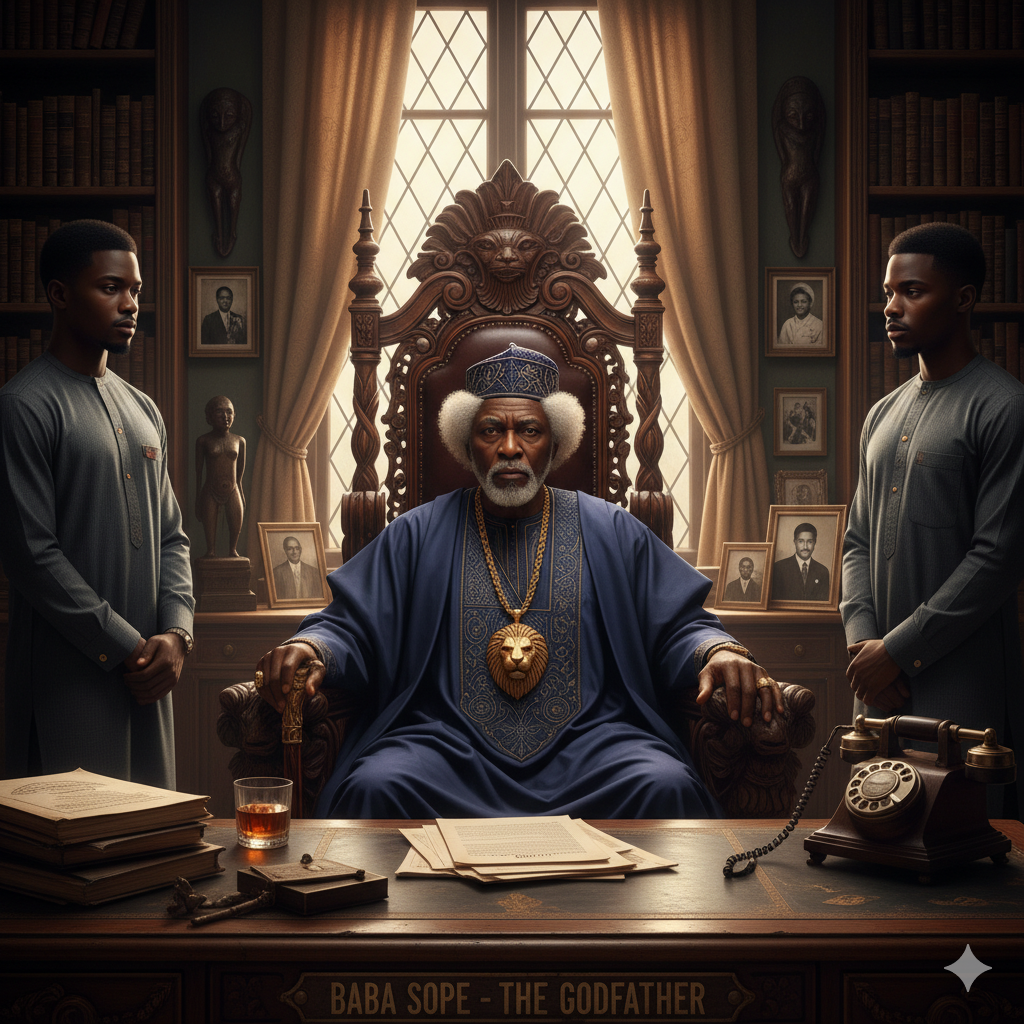
The phenomenon of godfatherism—popularly known as Baba Sope—has long been a defining feature of Nigeria’s social, economic, political, and governance structures, including within Kosofe.
For decades, political godfathers have played decisive roles in shaping the careers of leaders at every level: councillors, state lawmakers, members of the House of Representatives, senators, governors, presidents, ministers, commissioners, board members, and more.
While some see godfathers as positive forces who provide direction and stability, others regard them as negative influences whose dominance suppresses merit and fairness. Yet, their influence has endured across successive political eras.
A clear example is the widely held belief that without the backing of President Bola Ahmed Tinubu—the “godfather” of modern Nigerian politics—late President Muhammadu Buhari may not have won the 2015 presidential election. After several failed attempts since 1999, Buhari finally succeeded and went on to serve two terms, largely credited to this strategic alliance.
The Kosofe Experience
At the local level, godfatherism has been equally decisive. In Kosofe Local Government and its development areas, political godfathers have significantly shaped outcomes.
For instance, during the 2021 Kosofe Local Government elections, the emergence of Hon. Moyosore Ogunlewe as Chairman was strongly tied to external political godfathers. Initially, Lanre Carew led in the inconclusive primaries, but the party’s leadership ultimately declared Ogunlewe the winner.
Similarly, without the intervention of political godfathers, the current lawmakers representing Kosofe Constituencies I and II may not have secured their seats. The heated contest in Constituency I was especially dramatic, with tactics such as lodging delegates in secured hotels to ensure loyalty—a vivid reminder of the saying: “All is fair in political war.”
The Unending Cycle of Godfathers
Although godfatherism carries many disadvantages—imposition, patronage, and loyalty over competence—calls for its end may be wishful thinking. History shows that once one godfather exits the stage, another quickly emerges, whether as a godmother, queen mother, or godson. Politics, after all, abhors a vacuum. As the saying goes: “Seriki gomo, Samoni gomo, Oba mewa, Igba mewa”—ten kings for ten eras.
A Call to Political Godfathers
Our appeal to political godfathers is this: beyond influence, royal benefits, and patronage, they must listen to the people’s pulse and ensure that those they elevate to power embody sound character. Leaders must see service to humanity as a sacred duty and embrace Transparency, Accountability, and Probity (TAP) as guiding values. Only then can godfatherism evolve from a controversial tradition into a force for genuine progress.