
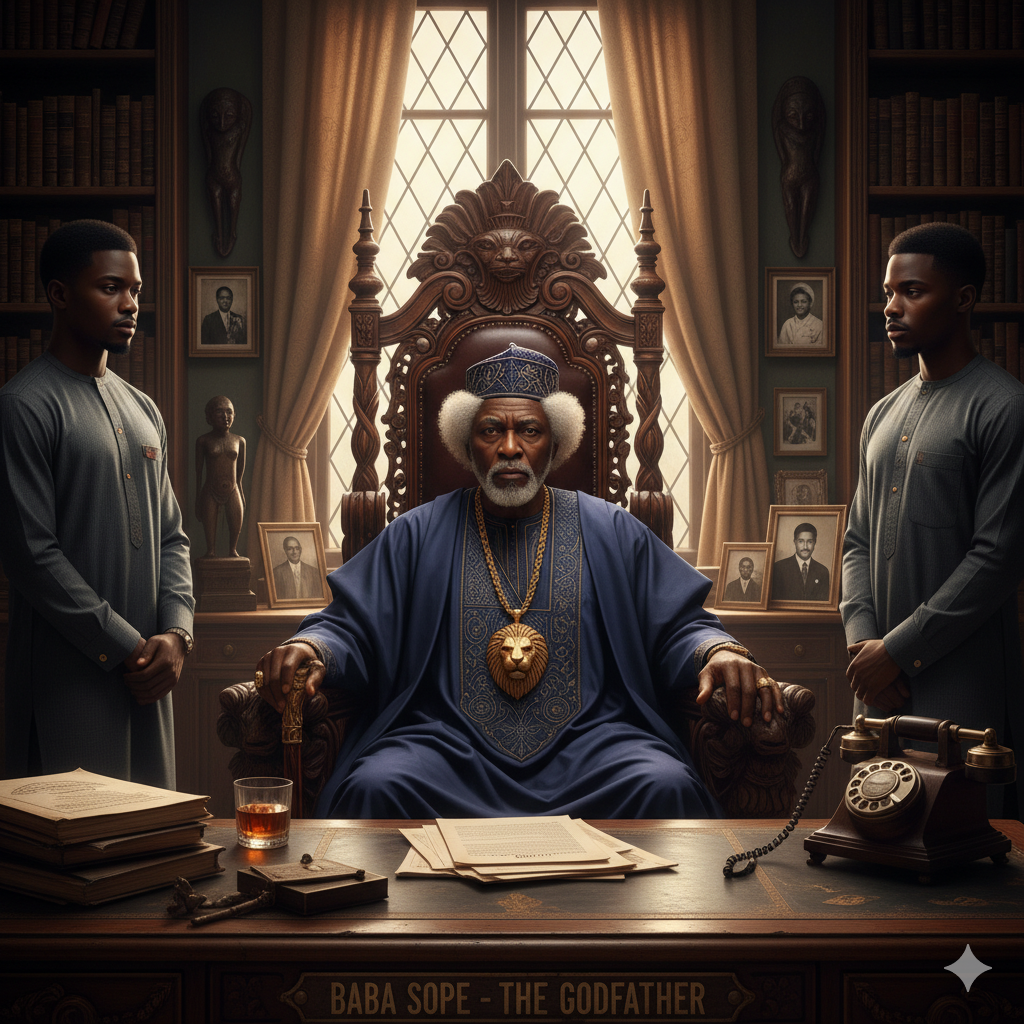
Kosofe Debate Rekindles Tensions Over Godfather Politics
Kosofe politics once again came under intense public scrutiny on Thursday after the publication of an article titled “Godfatherism: Baba Sope” ignited heated arguments among political stakeholders and commentators. The piece reopened longstanding questions about the influence of political godfathers in Nigeria’s democratic process, drawing sharply divided opinions.
Engr. Olusola Emmanuel Adedayo, Publisher and CEO of Moschinoblog, described godfatherism as an entrenched reality in Nigerian politics. He argued that it is unrealistic to expect politicians sponsored by powerful patrons to resist their influence, noting that the system has done more harm than good but remains inescapable in a political culture driven by money and influence.
Echoing this perspective, Oloye Salami Oluwaseun emphasized that godfathers wield enormous power, often determining who emerges as candidates and eventual winners. He cited the 2021 APC primaries in Kosofe as an example, alleging that godfather politics overturned the popular choice in favour of the incumbent chairman. He further contended that many politicians who once benefitted from godfatherism have now become its loudest critics.
However, Seun Ajayi strongly disagreed, insisting that Moyosore Ogunlewe’s emergence as council chairman was not the product of godfather backing but rather of genuine grassroots support. He accused established leaders of manipulation, claiming their preferred candidate was decisively rejected. In his words, “Structures built on arrogance and entitlement can never withstand the force of genuine popularity and grassroots support.”
Adedayo quickly dismissed Ajayi’s assertion, describing it as revisionist and maintaining that Ogunlewe’s victory was secured through the influence of Lagos APC power brokers rather than broad public acceptance. Oluwaseun backed this position, adding that the party in Kosofe has suffered setbacks due to the influx of former opposition members.
In defence of Ogunlewe, political commentator Aina Oyebanji praised his consistency and grassroots credibility, drawing parallels with Hon. Kafilat Ogbara. Oyebanji argued that Ogunlewe has continued to enjoy both leadership and popular support since joining the APC.
Bringing a broader perspective, Omoba Awofeso Rasheed described godfatherism as a universal phenomenon, likening it to domain influence. According to him, “Someone must push for you to attain a cadre in life. It’s been with us for a long time, and we are all culpable.”
The debate eventually spiralled into personal clashes, with Oluwaseun and Ajayi trading strong words and accusing each other of dishonesty and distortion. While some commentators defended the inevitability of godfatherism, others insisted that people-driven politics is gradually breaking down entrenched structures in Kosofe.
The exchanges underscore the polarizing role that godfatherism continues to play in Nigerian politics and highlight the deep divisions it fuels among political actors in Kosofe.
Kosofe: Debate on Godfatherism Deepens as Obasan Counters Oluwaseun
The debate over the role of godfatherism in Nigerian politics has intensified following a response by Ola’ Obasan to earlier comments made by Oloye Salami Oluwaseun.
In a counter-statement dated September 26, 2025, Obasan faulted what he described as Oluwaseun’s “incomplete and one-sided” position on political godfathers. He argued that while many political godfathers have successfully positioned their biological children in public office without resistance, they often interfere in the affairs of others.
“Some of them have their sons and daughters serving in different political capacities, and nobody has raised objections or interfered with their journeys. Yet, these same individuals seem overly concerned with every single action of the Kosofe Local Government Chairman. Why the selective interference? Why the double standards?” Obasan queried.
Obasan further maintained that the Kosofe Local Government Chairman was duly elected by the people, not appointed by any godfather, and should therefore be allowed the independence to carry out his duties without undue meddling.
While acknowledging that godfatherism has become entrenched in Nigeria’s political system, he noted that the practice has not been entirely negative, as it has also produced competent leaders who served with distinction.
The exchange between Oluwaseun and Obasan underscores the lingering tensions over political godfatherism in Kosofe and reflects a broader national debate about the influence of powerful political figures in Nigeria’s democracy.