
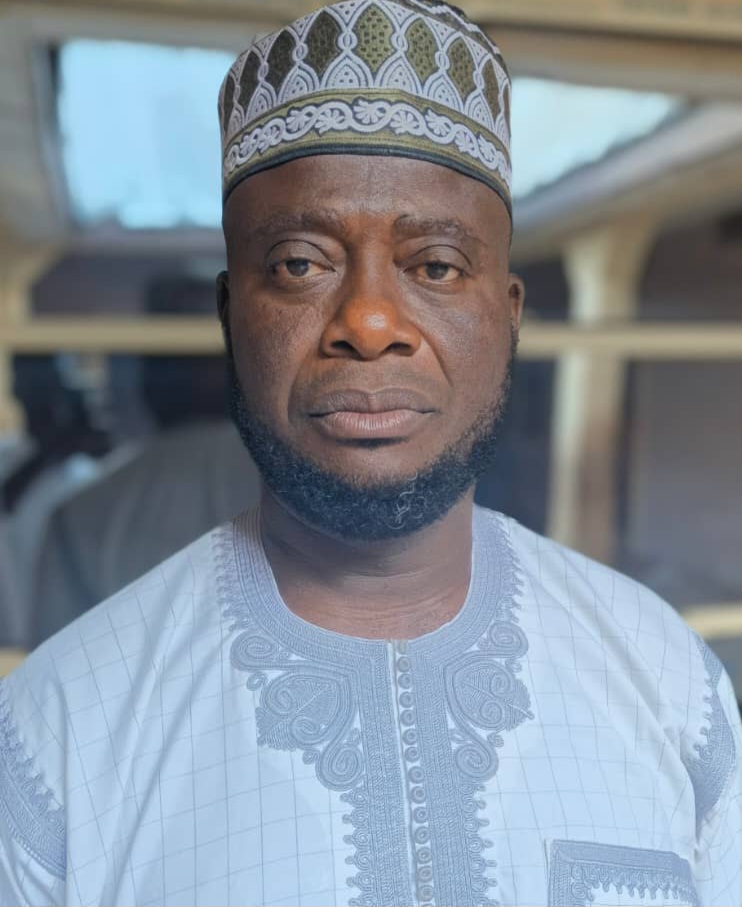
By Imam Murtadha Gusau
Wednesday, Ramadan 29, 1447 AH (March 18, 2026)
In the name of Allah, Most Merciful, the Bestower of Mercy.
All praise is due to Allah, Lord of the worlds. May the peace, blessings and salutations of Allah be upon our noble Messenger, Muhammad, and upon his family, his Companions and his true followers.
Dear brothers and sisters! Three deadly bomb blasts have struck Nigeria’s northeastern city of Maiduguri, killing at least 23 people and wounding more than 100 others.
The updated toll was given Tuesday after blasts occurred on Monday at the entrance of the University of Maiduguri Teaching Hospital and two local markets, known as Post Office and Monday Market.
Preliminary investigation reveals that the incidents were carried out by suspected suicide bombers.
But no group has yet claimed responsibility for the suspected bombings.
The deadly attacks in Maiduguri, the capital of Borno State, come as Nigeria battles a complex security crisis involving different armed groups in the north of the country.
Boko Haram and the ISIL (ISIS) affiliate in West Africa Province (ISWAP) group have carried out several attacks against army bases across Borno this month, killing a number of troops and seizing weapons.
The recent surge in attacks is not unconnected with intense military operations in the Sambisa forest, a known stronghold of armed groups.
Anyway, our prayers are with the families of the victims and those injured as a result of the blast. The act is utterly condemnable, barbaric and inhumane.
Last week, the army confirmed “coordinated attacks” on several military bases in the northeast, which killed at least 14 people, including 10 soldiers.
Respected brothers and sisters! Know that, in Islam, your life is not your own—it is a sacred trust and amanah given to you by Allah the Almighty. Self-destruction and suicide bombing is a grave misuse of this trust. Allah the Most High says:
“And do not kill yourselves. Surely, Allah is Most Merciful to you.” [Qur’an, 4:29]
Taking one’s own life is not an act of shahadah or martyrdom; it is a major sin that results in eternal damnation, as the perpetrator tries to take on the role of Creator by determining their own time of death.
Recruiters of suicide bombing often promise paradise, but Islamic law condemns the suicide bomber to hellfire (Jahannam). Our beloved Prophet Muhammad (Peace be upon him) said:
“Whoever kills himself with something in this world will be punished with it on the Day of Resurrection.” [Sahih Bukhari]
Islamic martyrdom (shahadah) is dying to elevate the word of Allah, not destroying innocent lives and oneself in a cowardly act of destruction.
Killing civilians, mutilating bodies, and breaking the trust of peace. The Qur’an explicitly equates killing one innocent soul to killing all of humanity (in Qur’an, 5:32). Therefore, a suicide bomber does not just kill themselves; they carry the weight of countless innocent souls, making it a double catastrophe of suicide and murder.
Respected servants of Allah! Know that this life is a trial, a test of patience. Despair is not for the Muslim believer. When hardships overwhelm you, do not take the path of destruction. Allah promises that:
“Surely with hardship comes ease.” [Qur’an, 94:5]
The suicide bomber who thinks they are escaping problems is, in reality, throwing themselves into an eternal fire. Turn to Allah, not to explosive devices.
Remember, life is a test, not a weapon! We are on this earth for the pleasure of Allah, not to cause destruction and corruption. The Prophet Muhammad (Peace be upon him) forbade us from taking our lives, regardless of the burden. When you feel hopeless, remember that Allah is more merciful to you than you are to yourself. Choosing suicide is an act of ingratitude, a sign that one has forgotten the mercy of Allah and tried to play Allah.
In the time of the Prophet Muhammad (Peace be upon him), there was a man who fought bravely but was severely wounded. Unable to bear the pain, he killed himself with his own sword. The Prophet Muhammad (Peace be upon him) said:
“He is in the Hellfire.”
Even a lifetime of fighting for a cause cannot excuse the final act of suicide. The pain of this world is temporary, but the consequences of a suicide attack are eternal.
It is narrated that many who take their own lives do so because they are misguided by handlers who paint a false picture of glory. These recruiters often ignore the Qur’anic prohibitions and sell a fake paradise.
The true power is resisting the urge to destroy, obeying Allah’s laws, and bearing hardship with patience, not falling for the deceptive whispers that promote ruin.
The perpetrators (Suicide bombers) will be tortured in the same manner they killed themselves. Paradise is forbidden to the one who takes their own life. The sin includes both suicide and mass murder. They Misused the life given to them by Allah the Almighty.
The noble Qur’an establishes a universal principle regarding the gravity of murder, equating the loss of a single innocent life to a crime against all of humanity. Allah states in the Qur’an:
“…if anyone slew a person—unless it be for murder or for spreading mischief in the land—it would be as if he slew the whole of mankind. And if anyone saved a life, it would be as if he saved the life of a whole people.” [Qur’an, 5:32]
The Prophet Muhammad (Peace be upon him) emphasised this further, saying:
“The destruction of the entire world is less significant to Allah than the killing of a single man.”
For every person killed wrongfully, a share of that sin is attributed to the first son of Adam (Qabil/Cain), because he was the first to set the precedent for killing.
Islamic history provides profound examples of choosing peace and mercy over retaliation, even under extreme provocation.
When Qabil threatened to kill his brother, Habil responded with profound fear of Allah, saying:
“If you raise your hand against me to kill me, I will not raise my hand against you to kill you. Indeed, I fear Allah, Lord of the worlds” [Qur’an, 5:28]
After being stoned and driven out of the city of Ta’if with blood in his sandals, the Prophet Muhammad (Peace be upon him) was offered the chance to have the city destroyed. Instead, he prayed for their descendants, saying:
“No, for I hope that Allah will bring forth from their progeny people who will worship Allah Alone.”
Despite facing injustice, the Prophet Muhammad (Peace be upon him) agreed to terms that seemed disadvantageous to the Muslims specifically to prevent bloodshed and promote long-term reconciliation.
True strength in Islam is not found in violence, but in the mastery of one’s own impulses. A famous Hadith states:
“The strong person is not the one who can wrestle others. Rather, the strong person is the one who controls himself when he is angry.”
Faith (Iman) is described as a “restraint against all violence”; a true believer is one from whom people’s lives and wealth are safe.
On the Day of Resurrection, the very first cases to be settled among people will be those concerning bloodshed.
Current turmoil requires a return to the foundational ethics of the Shari’ah, which lists the preservation of life as one of its five core objectives (Maqasid al-Shari’ah). The honour granted by Allah to the “Sons of Adam” (Quran 17:70) applies to all human beings, irrespective of faith, race, or social status. The Qur’an issues a stern warning for intentional murder:
“And whoever kills a believer intentionally, his recompense is Hell wherein shall he abide forever, and Allah’s wrath shall be on him and He curses him…” [Qur’an, 4:93]
Muslims are commanded to assist their brothers—whether they are the oppressed or the oppressor. To assist an oppressor means to “forbid and withhold that person from oppression.”
Dear brothers and sisters! No doubt, the sanctity of human life is a cornerstone of Islamic ethics, establishing that every soul is sacred, created by Allah, and deserves protection, regardless of faith or background. Islam teaches that taking a single innocent life is equivalent to destroying all of humanity, while saving one life is equivalent to saving all mankind.
In his farewell pilgrimage, Prophet Muhammad (Peace be upon him) declared:
“Verily, Allah the Exalted has made sacred your lives, your wealth, and your honour, just as your day, your city, and your month are sacred.”
This means that harming a person, whether Muslim or non-Muslim, is a direct violation of a sacred trust established by Allah the Almighty.
Life is a gift from Allah; only He can take it back, and it must not be ended except through the due process of justice.
In Shari’ah, the unjust killing of one person is equated to killing all of mankind. Why? Because the murderer who disregards the sanctity of one life has demonstrated that they hold no respect for any human life, effectively unleashing chaos and disregarding the divine mandate to protect life.
Intentionally taking an innocent’s life carries one of the most severe warnings in the Qur’an. Allah the Most High says:
“But whoever kills a believer intentionally – his recompense is Hell, wherein he will abide eternally, and Allah has become angry with him and has cursed him and has prepared for him a great punishment.” [Qur’an, 4:93]
It is a sin that shakes the throne of Allah.
When the two sons of Adam, Qabil and Habil offered sacrifices, only one was accepted. Jealousy consumed Qabil, who told his brother, “I will surely kill you.” Habil replied with righteousness, but Qabil committed the first murder on earth. The Prophet Muhammad (Peace be upon him) said that the son of Adam, Qabil has a share in the sin of every innocent person killed unjustly from that day on, because he was the one who started the path of shedding blood.
There was a man who killed ninety-nine (99) people and sought to repent. A monk told him he was beyond forgiveness, so the man killed the monk, making it hundred (100). Later, he sought a wise and knowledgeable man who told him to move to a land of righteousness. He died on the way, and the angels of mercy and punishment argued. Allah commanded the land to move so that he was closer to the land of the righteous, forgiving him due to his sincere intention to stop his unjust ways.
It is never too late to stop the bloodshed and repent, but the consequences of the blood are heavy.
Do not carry weapons against your brothers and sisters. Do not turn into the jahilliyyah (ignorance) of the past, striking the necks of one another.
Remember, in Islam, every life matters. The Qur’an did not say “Whoever kills a Muslim,” it said “whoever kills a soul (nafs)…” (Qur’an, 5:32). This applies to everyone, regardless of their nationality, region, tribe, race, or religion. Even in war, the Prophet Muhammad (Peace be upon him) strictly forbade killing children, women, the elderly, and monks in their places of worship.
Do not forget, your purpose as a human being is to uphold life, not to destroy it. You are a steward (khalifah) of Allah on earth, tasked with caring for His creation. The world is currently broken by indifference. By valuing the life of others, you bridge the divides that the devil aims to create. Every moment of life is valuable. Instead of causing destruction, spend your life saving, nurturing, and building. The reward for saving a life is so high that it is as if you saved all of humanity.
Finally, respected brothers and sisters! Ramadan is ending. But before Eid arrives, there are three things you should not overlook. Each one takes less than two minutes and carries immense reward:
- Orphan sponsorship
Be with an orphan in Paradise. The Prophet Muhammad (Peace be upon him) said:
“I and the one who sponsors an orphan will be like these two in Paradise,” and he held his index and middle fingers together.” [Sahih al-Bukhari]
- Eid gifts, food and meat
Every child deserves to smile on Eid. While your children open their gifts on Eid morning, thousands of orphans and displaced children will have nothing. For just N10,000, you can give a child new clothing, meat and food so they can celebrate Eid with dignity, joy and happiness.
- Zakatul-Fitr/Sadaqatul-Fitr
Your fast is not complete without this. Sadaqatul-Fitr is obligatory on every Muslim, including children and dependants. It must be paid before the Eid prayer, so that those in need can also celebrate Eid with food on their table.
Zakatul-Fitr must be paid BEFORE Eid prayer. Before it is too late. Do not let Eid pass without action. Every amount you give reaches someone in need. An orphan waiting. A child with no Eid food. A family with no food for Eid morning. You can change that right now. GIVE NOW. 100% of your donation goes to those in need. The Prophet Muhammad (Peace be upon him) said:
“I and the one who sponsors an orphan will be like these two in Paradise,” and he held his index and middle fingers together.” [Sahih Bukhari]
Make this Eid count. For them and for you. GIVE TO MUSLIMS IN NEED.
You can send your donations to the following account details:
- Account number: 0048647196.
- Account name: Murtala Muhammed.
- GTBank
Or:
- Account number: 1779691620
- Account name: Murtala Muhammed.
- Access Bank.
Donate Fisabilillah!
May Allah reward you abundantly as you kindly donate.
Ya Allah, do not make us among those who cause destruction and corruption on the earth, and protect us from the grave sin of taking an innocent life.
May Allah make us among those who benefit from the month of Ramadan, ameen.
And all praise is due to Allah, Lord of all the Worlds. May the peace, blessings and salutations of Allah be upon our noble Messenger, Muhammad, and upon his family, his Companions and his true followers.
Murtadha Muhammad Gusau is the Chief Imam of Nagazi-Uvete Jumu’ah and the late Alhaji Abdur-Rahman Okene’s Mosques, Okene, Kogi State, Nigeria. He can be reached via: gusauimam@gmail.com or +2348038289761 or +2348024192217.