
By Bilesanmi Abayomi
In Lagos State—and across Nigeria—the Oath of Secrecy remains a critical but controversial component of public service. While designed to protect classified information, the oath has come under scrutiny for potentially discouraging whistleblowing and impeding transparency in governance.

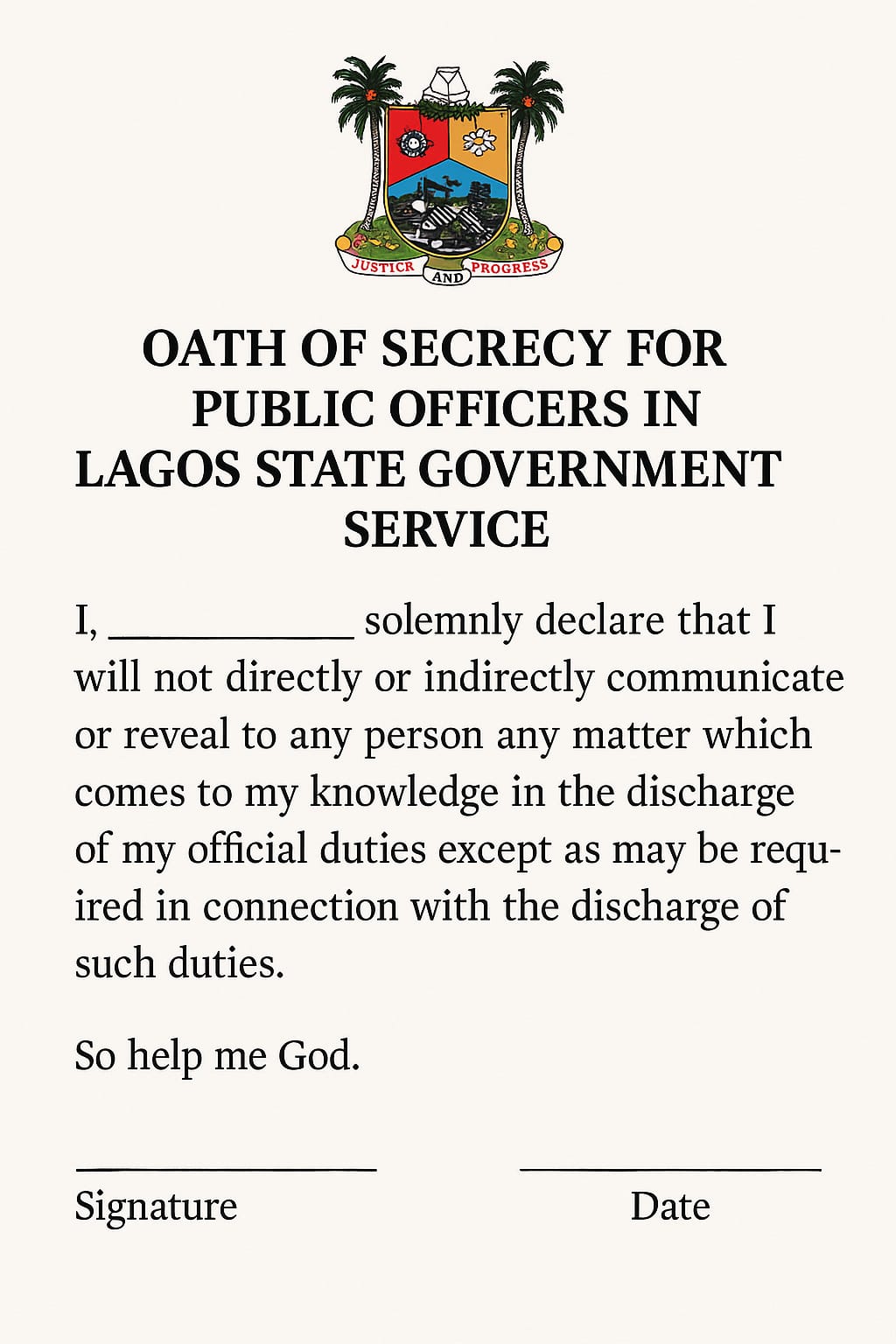
Image for Illustration
A Legal Requirement
The Oath of Secrecy is anchored in multiple legal frameworks, including the Public Service Rules, the Official Secrets Act of 1962, and various state-specific civil service regulations. It is commonly administered during onboarding or upon an officer’s assumption of roles in ministries, departments, and agencies that handle sensitive or strategic data.
What the Oath Entails
Typically signed and sworn before a commissioner for oaths or a designated legal authority, the oath binds public officers to strict confidentiality. It includes:
A vow not to disclose official information without proper authorization;
A commitment to maintain secrecy even after leaving government service;
An acknowledgment of penalties for any breach.
Enforcement and Penalties
Breaching the Oath of Secrecy carries stiff consequences. Public servants risk disciplinary actions ranging from suspension to outright dismissal. In severe cases, legal prosecution may follow under the provisions of the Official Secrets Act.
A Barrier to Whistleblowing?
Despite its intent to uphold the integrity of government operations, critics argue that the oath may create a chilling effect on whistleblowing. Public officers may hesitate to report corruption, mismanagement, or abuse, fearing legal and professional reprisals—even when disclosures are in the public interest.
This delicate balance between protecting confidential information and promoting accountability continues to stir debate in Lagos State’s civil service and beyond. As Nigeria grapples with deepening demands for transparency, the role of the Oath of Secrecy is increasingly under the spotlight.