
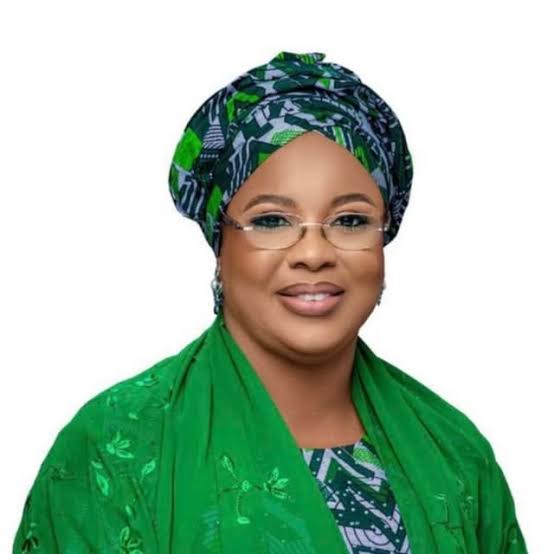
Political tensions within the Kosofe Federal Constituency have intensified following Prince Daniyan Olushola’s public call for the recall of Hon. Kafilat Adetola Ogbara, the federal lawmaker representing the area. In a social media post on November 16, Prince Olushola accused Ogbara of “not doing anything” for the constituency and vowed to initiate a formal recall process.
His statement sparked widespread reactions across the constituency, drawing comments from political stakeholders, party loyalists, and civic advocates. While some residents described the call as an expression of genuine frustration, others dismissed it as politically driven and impractical, noting the complexity, cost, and political realities of recalling a federal lawmaker in a strong APC-dominated constituency.
Defence of Ogbara: “Her Critics Don’t Understand Legislative Work”
In a swift counter-reaction, Ola Obasan released a detailed statement defending Ogbara’s performance at the National Assembly. The platform argued that many critics misunderstand the responsibilities of federal lawmakers, noting that their primary mandate is legislative—making laws, sponsoring bills, and shaping national policy—not necessarily executing community projects.
The platform cited two major legislative interventions led by Ogbara:
The Reserved Seats for Women Bill, which seeks to create additional seats in the National Assembly and State Houses of Assembly exclusively for women, in line with global gender inclusion standards.
The 15% Female Inclusion in the Armed Forces Bill, aimed at mandating increased female participation across all levels of Nigeria’s military.
According to the publication, these bills have attracted national and international recognition, positioning Ogbara as a notable contributor to structural reforms. It argued that dismissing such work as “doing nothing” reflects a misunderstanding of governance and legislative impact.
Stakeholders Urge Balance and Constructive Engagement
The debate widened as community voices called for a more balanced assessment of Ogbara’s performance. Public affairs commentator Ibraheem Bakare Olawale (IBO) noted that while citizens’ expectations are legitimate, governance outcomes often take time to materialise at the grassroots.
He stressed the importance of constructive criticism, improved communication between representatives and constituents, and mutual respect. Stakeholders also warned that patience should not be misused by elected officials through poor transparency, nepotism, or mismanagement.
Taiwo Lasisi of the Ta’awun Humanitarian Forum highlighted the need for accountability on both sides. “Once the needs of the constituency and the responsibilities of public officials align with transparency and respect, the people’s needs will be better met—not only those of political office holders and their supporters,” he said.
Opposition Intensifies: Comparisons to Jimi Benson and Claims of Weak Visibility
Opposition figures—including Prince Olushola and YPP chieftain Hon. Samad Okufuwa—maintained that Ogbara’s presence in Kosofe remains “invisible and imperceptible.” They argued that her representation falls short when compared with lawmakers like Hon. Jimi Benson of Ikorodu, who has reportedly facilitated several job placements and community-oriented interventions.
While acknowledging Ogbara’s gender-focused legislative contributions, critics insisted that such efforts do not adequately address broader socioeconomic needs in Kosofe. They pointed to communities such as Owode Onirin, Irawo, and Thomas Ajegunle, where they claim her influence is minimal.
Prince Olushola maintained that his critique is performance-driven rather than partisan. He warned that unless Ogbara recalibrates her strategy and improves engagement with constituents, the opposition is prepared to mobilize behind an alternative candidate in the next general election.
A Constituency at a Political Crossroads
The ongoing exchanges reveal deeper tensions within Kosofe’s political environment: between legislative responsibilities and grassroots expectations, between internal party dynamics and emerging opposition, and between public perception and political reality.
With about 18 months left in her first term, Hon. Kafilat Ogbara faces increasing pressure to reaffirm her relevance and expand her visibility within the constituency. As political activities intensify ahead of the next election, whether Kosofe consolidates behind her legislative agenda or shifts toward new leadership remains an unfolding question.