
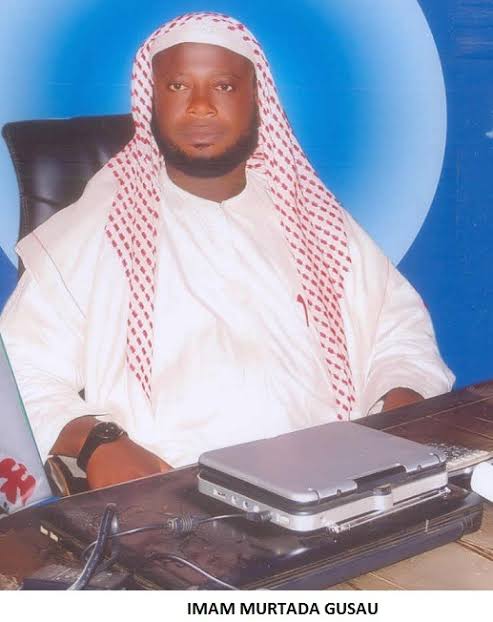
By Imam Murtadha Gusau
Wednesday, Ramadan 15, 1447 AH (March 04, 2026)
In the Name of Allah, the Most Gracious, the Most Merciful
All praise is due to Allah, the Lord of all creation. May Allah extol the Messenger in the highest company of Angels and grant him peace―likewise, his family, his Companions and all those who truly follow him until the Day of Resurrection.
Dear brothers and sisters! Islamic teachings strongly condemn the indiscriminate violence, destruction, and moral decay caused by war. While permitting strictly controlled self-defense, Islam prohibits killing non-combatants, destroying infrastructure, or causing wanton devastation. The consequences of war are seen as a severe trial and a consequence of human injustice.
No doubt, war is a devastating, chaotic fire that burns away humanity’s goodness. It destroys, kills, and breaks families, violating the sanctity of life given by Allah. In a world filled with conflict, it is a wake-up call to turn toward righteousness, as war often brings out the darkest traits in humanity—greed, arrogance, and cruelty. True strength lies not in aggression, but in patience, mercy, and seeking justice without causing harm.
War often results in the illegal killing of innocent people, women, children, and the elderly—an act strictly forbidden by our beloved Prophet Muhammad (Peace be upon him).
The burning of trees, destruction of homes, and killing of animals in war are forbidden, even in conflict. War leads to the spread of oppression and injustice, which are abhorred by Allah. Instead of reckless retaliation, Islam encourages patience, as it is better for the Muslim believer in the long run.
Even when faced with extreme hostility, the Prophet Muhammad (Peace be upon him) taught us gentleness, as shown when he refused to curse those who abused him, stating that Allah loves kindness in all matters. This demonstrates that the ultimate goal in life, even during times of conflict, is to maintain one’s character, faith, and adherence to Divine Law, rather than surrendering to the evil of unchecked violence.
On the other hand, peace is a fundamental pillar of Islam, a word derived from the Arabic root S-L-M, meaning both “peace” (salam) and “submission” to Allah. True peace in Islam is a comprehensive state of being that includes inner tranquility, social harmony, and reconciliation.
After being thrown into a well and sold into slavery by his own brothers, Prophet Yusuf (AS) rose to power in Egypt. When his brothers later came to him for help during a famine, he chose forgiveness over revenge, proving that compassion can heal even the deepest wounds.
A neighbour of Prophet Muhammad (Peace be upon him) would throw garbage in front of his house daily. One day, when the garbage was missing, the Prophet visited the neighbour and found him sick. This act of unsolicited kindness touched the neighbour’s heart, leading him to follow Islam.
Facing intense opposition, the Prophet Muhammad (Peace be upon) signed a peace treaty that appeared disadvantageous to his followers. He prioritised preventing bloodshed and promoting reconciliation as a core principle rather than just a strategy.
Our beloved Prophet Muhammad (Peace be upon him) taught us that:
“A true believer is one with whom others feel secure.”
He emphasised that a Muslim is someone from whose tongue and hands others are safe from harm.
One of the most motivational teachings is that:
“Allah grants to gentleness what He does not grant to violence.”
This encourages Muslim believers to approach all life situations with a calm and soft heart.
Islam views all of humanity as coming from a single origin. Peace is achieved when people “know one another” (Quran, 49:13) and treat others as members of one human family.
The Qur’an directs Muslim believers to respond to harshness with peace and to incline toward peace whenever it is offered.
Our leader, Prophet Muhammad (Peace be upon him) taught us that spreading peace and love is essential for faith. Furthermore, true strength is defined not by physical power, but by self-control during anger.
True peace begins with cultivating mercy, which extends to all creation. Reconciliation is considered a superior virtue, as it heals the social fabric, making it more valuable than certain voluntary acts of worship.
Peace is undeniably one of the greatest human needs. Peace is also a fundamental aspect of Islam. In fact, the word Islam means peace and submission. Allah Almighty says:
“Do good to others as Allah has done good to you, and do not seek corruption and mischief in the land, for Allah does not love those who cause corruption and make mischief.” [Qur’an, 28:77]
And Allah the Most High says:
“Peace is better.” [Qur’an, 4:128]
And He says:
“And if they incline toward peace, then you too incline toward it, and put your trust in Allah. Indeed, He is the All-hearing, the All-knowing.” [Qur’an, 8: 61]
And He says:
“…And settlement (reconciliation) is best…” [Qur’an, 4:128]
And the noble Qur’an calls its way:
“… The ways of peace …” [Qur’an, 5:16]
It describes reconciliation as the best policy (Qur’an, 4:128), and states that Allah hates any disturbance of peace (Qur’an, 2:205).
Abu Hurairah reported: The Messenger of Allah (Peace be upon him) said:
“Whoever believes in Allah and the Last Day, let him speak goodness or remain silent. Whoever believes in Allah and the Last Day, let him honour his neighbour. Whoever believes in Allah and the Last Day, let him honour his guest.” [al-Bukhari and Muslim]
One of the ninety-nine names of Allah is salam which means peace.
It’s clear our actions towards our fellow human beings can help maintain peace. It is critical we practice kindness, treat others with respect, speak gently, avoiding anger and violence – traits displayed by our beloved leader and Prophet Muhammad (Peace be upon him).
My beloved people! Islam emphasises peace, sanctity of life, and strict ethical constraints during conflict, viewing war as a destructive, last-resort measure. The Qur’anic injunction to fight is accompanied by prohibitions against exceeding limits, protecting non-combatants, and avoiding unnecessary bloodshed. True strength is spiritual resilience over violence.
The noble Qur’an states that killing one person unjustly is akin to killing all of humanity.
In unavoidable conflict, Muslims must not kill women, children, the elderly, or religious leaders, nor destroy infrastructure or trees.
Prophet Muhammad (Peace be upon him) taught us:
“Never aspire for confronting your enemies in a fight. Pray to Allah to be among those who seek living peacefully with others.”
War is viewed as a destructive phenomenon. It destroys communities and violates the sanctity of life.
Our beloved Prophet Muhammad (Peace be upon him) taught that the greatest Jihad (struggle) is often the internal, spiritual battle against one’s own evil desires—a battle for inner peace.
Following the example of Prophet Ayyub (AS), Muslim believers are encouraged to show ultimate patience and reliance on Allah during times of suffering and conflict.
Respected brothers and sisters! Remember that Islam is a religion of peace. War brings only destruction, pain, and breaking of ties. The true mujahid is the one who strives against his lower self, not the one who spreads chaos on earth. We are commanded to build, not destroy. Do not seek the path of bloodshed, but seek the path of reconciliation.
Dear brothers and sisters! The Ummah today is desperate for men and women raised for the great moments of life, for the hour when truth is costly. Men and women of refined character and disciplined souls, who guard unity the way a mother guards her child, and who despise division the way they despise a cruel enemy at the gate. They understand that anger for the sake of Allah is not a license for cruelty, not permission for injustice, and never a justification to violate the honour of a Muslim in the name of “setting things right.”
They are people of high aspiration and long horizons. Patient when hardship sinks its claws, distant from temptation when others crumble, organised when chaos descends. Their minds are balanced, their hearts are tender, their opinions are wise, their presence is calming, their faces are reassuring, and their mistakes are few. When Allah is mentioned, they visibly tremble. When His verses are recited, their iman soars, and when corrected, they smile in genuine gratitude. Their eyes are quick to shed a tear, and their hearts carry a grief for their Ummah, an ache that keeps them awake, and a softness that keeps them human.
They endure a short day for the sake of a long tomorrow. They are not crushed by what they miss of this world, and not intoxicated by what they gain from it. They breathe with the patience of people who know the road is long, and they speak with the wisdom that long roads teach.
You won’t truly recognise them when the air is calm and people agree. You recognise them when the air burns, when people clash, when pressure rises, when voices sharpen, when it becomes easy to be unfair and tempting to be harsh. In such moments, they remain just, restrained, Prophetic.
They are the front lines of our Ummah’s causes, because they are its elites, its conscience, its mind, its caring parent, its protective shade, and its watchful eye. They defend it when it’s attacked, they heal it when it is injured, they veil it when it is exposed, and hold the compass towards the Hereafter when everyone loses direction.
Every age has needed such people. But today, the need is urgent. They are the people of Allah. They are the people of the Qur’an. They are the people of life-defining stances!
Ya Allah, our lord, unite our great nation, Nigeria around the principles of justice, peace, love and faith.
Put peace and love in our hearts for the diversity that makes our country so beautiful.
Oh Lord, most Strong, Give us the strength to protect and care for our neighbours.
Oh Lord, we pray for our nation, Nigeria, to remain loving, compassionate, remove prejudice from our hearts, and enable us to love our brothers and sisters of all faiths and none.
Make our hearts and minds aware of our heritage, fulfilling duties and responsibilities as a citizen of our country!
Ya Allah, the Most Merciful, allow us to show kindness to those most vulnerable in society.
Protect us from all evil, inspire and guide us in defending those open to abuse.
Lord, the Most Generous allow us to give in charitable activity, and to help those most in need.
Lord give our Governments vision and wisdom, as they take decisions affecting peace in our world.
Ya Allah, our Sustainer, allow us to care for our environments and sustain this world for future generations.
Lord, the Most merciful, Most Generous, please give us the patience to continue to learn from one another and work towards a more peaceful and kind world.
Make true in our nation the ideas of freedom and justice and brotherhood for all those who live for them.
Make our hearts generous so that we may treat others as we wish to be treated ourselves. Help us to share that which we have with others, for your sake. Strengthen us, love us and be kind to us all.
Ya Allah, guide us in maintaining peace in our lives, blossom peace and kindness in the hearts of the troubled and help us live this life according to the virtues of our religion In Shaa Allah.
Ya Allah accept our fasting and good deeds in this noble month of Ramadan, ameen.
All praise be to Allah, the Sovereign Judge, the Most Merciful and Compassionate to His weak servants, and the Almighty Avenger against the oppressors. I bear witness that there is no deity worthy of worship but Allah alone with no partner, and I bear witness that Muhammad is His servant and most faithful Prophet. O Allah, send Your blessings and peace upon him and his family and companions.
Murtadha Muhammad Gusau is the Chief Imam of Nagazi-Uvete Jumu’ah and the late Alhaji Abdur-Rahman Okene’s Mosques, Okene, Kogi State, Nigeria. He can be reached via: gusauimam@gmail.com or +2348038289761 or +2348024192217.