
By Bilesanmi Abayomi
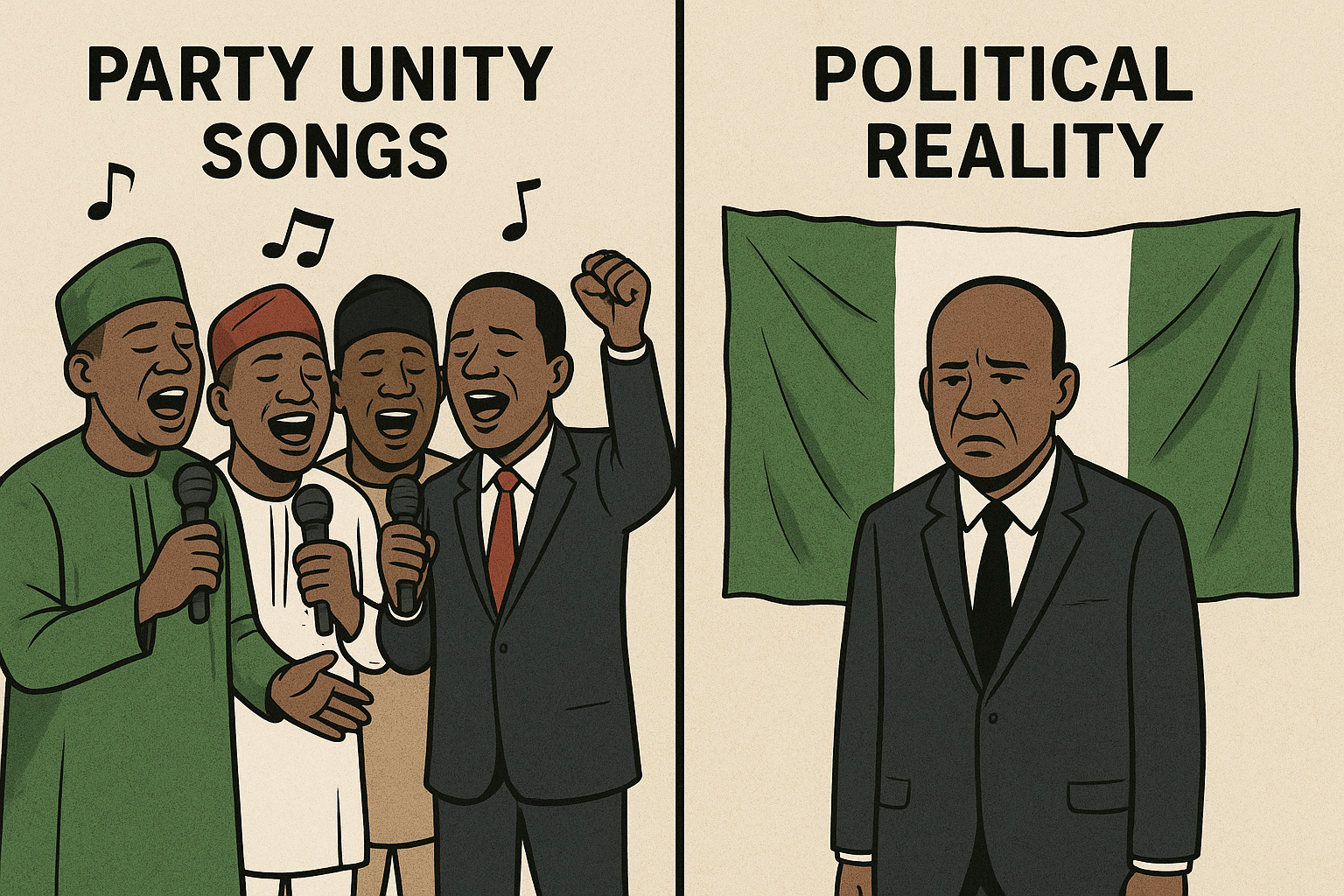
For decades, internal crises within Nigeria’s political parties have exposed a glaring gap between rhetoric and reality, as power tussles and control of resources continue to dominate the political landscape.
At campaign grounds and party gatherings, members often sing unity songs such as:
“E Maje Kaja ooo,
E Maje Kaja ooo,
Oun to wa nile oto pin,
E Maje Kaja ooo.”
Loosely translated, the lyrics call for peace and fairness, emphasizing that what belongs to the collective should be shared equitably.
Yet, from the ruling party to the opposition — at local, state, and national levels — recurring struggles for dominance, personal interests, and deep divisions suggest that many political leaders and their followers do not fully practice the unity they publicly profess.
RELATED NEWS
KosofePost Urges Political Stakeholders to Prioritize Development Over Rifts
Kosofe Debate Rekindles Tensions Over Godfather Politics
Kosofe Chairman’s Ally Debunks EFCC, ICPC Probe Claims
Ikosi-Isheri G6 Councillors Shun Ogbara’s Back-to-School Programme
Kosofe Residents Fault G4 Lawmakers’ Counsel Over Defamation Row
KosofePost Urges Political Stakeholders to Prioritize Development Over Rifts
Political analysts contend that until party actors begin to align their words with genuine actions, the cycle of internal wrangling will persist, further weakening party structures and undermining Nigeria’s democratic process.