
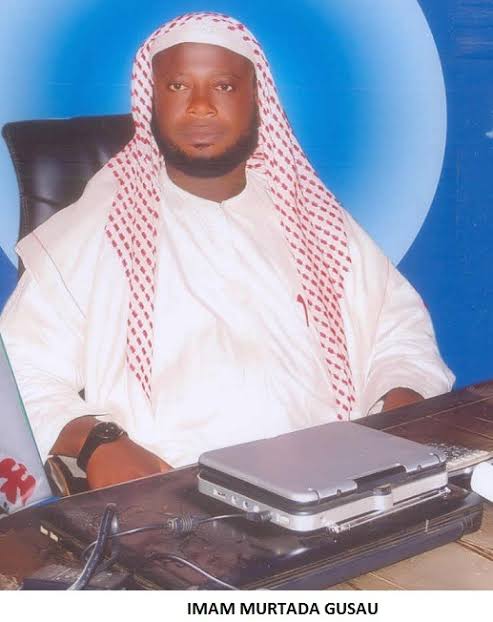
By Imam Murtadha Gusau
In the name of Allah, the Most Gracious, the Most Merciful
All praise is due to Allah, who raised the status of His Messenger Muhammad (Peace be upon him) above all people, praised him for his magnificent character, and placed him upon the Straight Path. I bear witness that there is no deity worthy of worship except Allah alone, without partner, and I bear witness that Muḥammad is His servant and Messenger. May Allah send abundant peace and blessings upon him. To proceed:
Dear brothers and sisters! On the day of al-Hudaybiyyah, Quraish sent a number of their men to negotiate with the Messenger of Allah (Peace be upon him). Among them was Urwah Ibn Masʿud al-Thaqafi.
As he spoke with the Prophet Muhammad (Peace be upon him), he would reach out and take hold of the Messenger of Allah’s beard. Al-Mughirah Ibn Shuʿbah, may Allah be pleased with him, was standing beside the Prophet (Peace be upon him) with a sword and wearing a helmet. Whenever Urwah reached his hand toward the Prophet’s beard, al-Mughirah struck his hand with the lower end of his sword’s scabbard and said:
“Keep your hand away from the beard of the Messenger of Allah (Peace be upon him)!”
Urwah then began closely observing the Companions of the Prophet (Peace be upon him). When he returned to his companions among the polytheists, he said:
“O my people! By Allah, I have visited kings. I have visited Caesar, Chosroes, and the Negus. By Allah, I have never seen any king whose companions honoured him as the Companions of Muhammad honour Muhammad. By Allah, whenever he spat, it would fall into the hand of one of them, who would then rub it over his face and skin. Whenever he gave them an order, they rushed to carry it out. Whenever he performed ablution, they would almost fight over the water from his ablution. Whenever he spoke, they lowered their voices in his presence, and out of reverence for him, they would not look intently at him.” [Narrated by al-Bukhari]
May Allah be pleased with those blessed lions of the battlefield, the Companions of the trustworthy Prophet Muhammad (Peace be upon him). They truly fulfilled the words of Allah, when He said:
“Indeed, We have sent you as a witness, a bearer of glad tidings, and a warner, so that you may believe in Allah and His Messenger, support him and honour him, and glorify Him morning and evening.” [Surah al-Fath: 8–9]
Their reverence for the Messenger of Allah (Peace be upon him) reached the level described by Amr Ibn al-Aṣ, may Allah be pleased with him, when he said:
“No one was more beloved to me than the Messenger of Allah (Peace be upon him), and no one was more majestic in my eyes than him. I could not bear to fill my eyes with the sight of him out of reverence for him. If I were asked to describe him, I would not be able to do so, because I never used to look at him fully.” [Narrated by Muslim]
When they were in his presence, they would sit “as though birds were perched upon their heads” and they would not raise their heads toward him out of reverence for him.
Indeed, honouring the Prophet Muhammad (Peace be upon him), revering him, and respecting him is an obligatory duty and a binding right upon everyone who believes in Allah and His Messenger (Peace be upon him). Allah has promised success to those who do so. He says:
“So those who believe in him, support him, help him, and follow the light that was sent down with him—it is they who are successful.” [Surah al-Aʿraf: 157]
Respected brothers and sisters! How magnificent is the status of the Prophet Muhammad (Peace be upon him) with his Lord!
Allah raised his mention, exalted his rank, praised his character, purified his heart, and honoured his speech and intellect. Allah the Most High says:
“By the star when it descends. Your companion has neither gone astray nor fallen into error. Nor does he speak from his own desire. It is nothing but revelation revealed.” [Surah al-Najm: 1–4]
And He, The Most High says:
“And We have raised high your mention.” [Surah al-Sharḥ: 4]
And He The Almighty says:
“And indeed, you are truly of magnificent character.” [Surah al-Qalam: 4]
The Prophet Muhammad (Peace be upon him) is the leader of all mankind, the possessor of the Praiseworthy Station, the intimate friend of al-Rahman, and the first person for whom the gate of Paradise will be opened. The Prophet (Peace be upon him) said:
“I will have the greatest number of followers among the Prophets on the Day of Resurrection, and I will be the first to knock at the gate of Paradise.” [Narrated by Muslim]
He (Peace be upon him) also said:
“I am the leader of the children of Adam on the Day of Resurrection, and I say this without boasting. In my hand will be the Banner of Praise, and I say this without boasting. There will be no Prophet on that day, from Adam onward, except that he will be beneath my banner. And I will be the first for whom the earth is split open, and I say this without boasting.” [Narrated by al-Tirmidhi]
Dear servants of Allah! Honouring and revering the Prophet Muhammad (Peace be upon him) includes every word and action that is appropriate to the rank and status in which Allah has placed him. One way of doing so is to refer to him by his Prophethood and Messengership, rather than addressing him simply by his name as one would address an ordinary person.
Allah, Exalted, called His other Prophets and Messengers by their names, but our beloved Prophet Muhammad (Peace be upon him) was addressed in the Qurʾan with words such as “O Prophet” and “O Messenger.”
Indeed, Allah prohibited people from calling the Messenger of Allah (Peace be upon him) in the same way that they called one another. Allah the Most High says:
“Do not make your calling of the Messenger among yourselves like your calling of one another.” [Surah al-Nur: 63]
One of the clearest signs of honouring and revering him is to give precedence to his words, his rulings, and his Sunnah over those of anyone else. Allah Almighty says:
“O you who believe, do not put yourselves forward before Allah and His Messenger.” [Surah al-Hujurat: 1]
And He, the Most High says:
“It is not for a believing man or woman, when Allah and His Messenger have decided a matter, to have any choice in their affair. Whoever disobeys Allah and His Messenger has certainly gone far astray.” [Surah al-Ahzab: 36]
Allah prohibited raising one’s voice above the voice of the Prophet Muhammad (Peace be upon him) or speaking loudly in his presence. Although this ruling concerned his lifetime, after his death likewise no ruling is to be placed above his ruling, and no statement, guidance, or Sunnah is to be given precedence over his words and his Sunnah.
By Allah, this is among the signs of the piety of the hearts. Allah the Most High says:
“O you who believe, do not raise your voices above the voice of the Prophet, nor speak loudly to him as you speak loudly to one another, lest your deeds become worthless while you do not realise it. Indeed, those who lower their voices in the presence of the Messenger of Allah are the ones whose hearts Allah has tested for piety. For them is forgiveness and a magnificent reward.” [Surah al-Hujurat: 2–3]
The Companions embodied this noble etiquette. They lowered their voices in his presence.
When this verse was revealed, Umar Ibn al-Khattab, may Allah be pleased with him, “would speak to the Prophet (Peace be upon him) as quietly as someone sharing a secret, to the point that the Prophet (Peace be upon him) could not hear him clearly unless he asked him to repeat what he had said.” [Narrated by al-Bukhari]
Anas, may Allah be pleased with him, even said:
“The doors of the Prophet (Peace be upon him) used to be knocked upon with the fingernails.” [Narrated by al-Bukhari in al-Adab al-Mufrad]
Those who oppose his words and his Sunnah with the opinions of men and the desires of thinkers have not truly honoured or revered the Messenger of Allah (Peace be upon him).
What person is there, and what thinker is there, whose status, thought, and opinion can be placed on the same level as the words of the infallible Messenger of Allah (Peace be upon him), who does not speak from his own desire?
May Allah be pleased with Ibn Abbas. On one occasion, he prayed alone behind the Prophet Muhammad (Peace be upon him), and the Prophet (Peace be upon him) moved him so that he stood beside him. Ibn Abbas, however, moved back and continued praying behind him.
When the Prophet (Peace be upon him) finished the prayer, he asked him:
“What is the matter with you? I placed you beside me, yet you moved back?”
Ibn Abbas replied:
“O Messenger of Allah! Is it fitting for anyone to pray alongside you when you are the Messenger of Allah whom Allah has given such a rank?”
The Prophet (Peace be upon him) then supplicated to Allah to increase him in knowledge and understanding. [Narrated by Ahmad]
The leading Companions did not regard anyone’s statement as comparable to the statement of the Messenger of Allah (Peace be upon him), whoever that person might be.
Abdullah Ibn Umar, may Allah be pleased with them both, once said:
“I heard the Messenger of Allah (Peace be upon him) say, “Do not prevent your women from going to the Mosques when they seek your permission to go there.”
One of his sons said:
“By Allah, we will prevent them!”
Abdullah turned toward him, rebuked him severely, and said:
“I tell you what the Messenger of Allah (Peace be upon him) said, and you say By Allah, we will prevent them?” [Narrated by Muslim]
Likewise, Imran Ibn Husain, may Allah be pleased with them both, narrated that the Prophet (Peace be upon him) said:
“Modesty brings nothing but good.”
Bushair Ibn Kaʿab then said:
“It is written in wisdom that some forms of modesty bring dignity and some forms of modesty bring calmness”—meaning weakness.
Imran said to him:
“I narrate to you from the Messenger of Allah (Peace be upon him), and you narrate to me from your writings?!” [Narrated by al-Bukhari and Muslim]
This was the path followed by every person who truly honoured the Messenger of Allah (Peace be upon him) among the Tabiʿun and those who came after them from the righteous predecessors and the leading Imams of guidance.
Out of reverence for the Messenger of Allah (Peace be upon him), they never gave precedence to the words of another person, an opinion, personal inclination, or intellectual thought over the words of the Messenger of Allah (Peace be upon him).
On one occasion, the great Imam Ibn Abi Zi’ib narrated a Hadith, and a man asked him:
“Do you follow this, O Abu al-Harith?”
He struck his own chest and raised his voice at the man, saying:
“I narrate to you from the Messenger of Allah (Peace be upon him) and you ask me whether I follow it?! Yes, I follow it! It is obligatory upon me and upon everyone who hears it. Allah chose Muhammad (Peace be upon him) from among mankind and guided them through him and at his hands. He chose for him what He conveyed through his tongue. Therefore, all creation must follow him willingly and humbly. They have no way out of that.”
May Allah have mercy upon Imam al-Shafiʿi. A man once came to him and asked him about an issue. Al-Shafiʿi replied:
“The Messenger of Allah (Peace be upon him) ruled such and such.”
The man then asked Imam al-Shafiʿi:
“But what do you say?”
Imam Al-Shafiʿi replied:
“Do you see me in a church?! Do you see me in a synagogue?! Do you see a religious belt around my waist?! I tell you, ‘The Messenger of Allah (Peace be upon him) ruled such and such,’ and you ask me, ‘What do you say?!’”
Among the ways of honouring the Messenger of Allah (Peace be upon him) is avoiding everything that involves improper conduct toward him and safeguarding his status from every fault or deficiency that contradicts his protected status.
Insulting the Prophet Muhammad (Peace be upon him), criticising him, belittling him, or disparaging him constitutes apostasy (Riddah) from Islam and contradicts the duty of honouring and revering him.
Imam Malik even said:
“Whoever says, The Prophet’s (Peace be upon him) lower garment was dirty, intending thereby to insult him, is to be killed.”
Dear servants of Allah! Allah is the security of those who are afraid and the hope of those who hope. Whoever worships Him with both fear and hope—longing for Allah’s mercy, hoping for His bounty, while remaining fearful and apprehensive of His punishment and retribution—Allah will grant him security from what he fears and reward him with His Paradise and pleasure.
The Prophet Muhammad (Peace be upon him) once entered upon a young man who was dying and asked him:
“How do you find yourself?”
He replied:
“By Allah, O Messenger of Allah, I hope in Allah, but I fear my sins.”
The Messenger of Allah (Peace be upon him) said:
“These two do not come together in the heart of a servant in a situation such as this except that Allah gives him what he hopes for and grants him security from what he fears.” [Narrated by al-Tirmidhi]
The Muslim believer glorifies his Lord and fears Him, while at the same time hoping in Him and longing for what is with Him. These two qualities together produce his good expectations of his Lord and Master.
The Prophet Muhammad (Peace be upon him) said:
“None of you should die except while having good expectations of Allah.” [Narrated by Muslim]
Ya Allah, we ask You to grant us good expectations of You, fear of You that stands between us and disobedience to You, and hope that drives us toward obedience to You.
Ya Allah, help us and do not help others against us. Support us and do not support others against us. Plan in our favour and do not plan against us. Grant us victory over those who transgress against us.
Ya Allah, grant us security in our homelands, rectify our leaders and those entrusted with our affairs, and place authority over us in the hands of those who fear You, who are mindful of You, and follow what pleases You.
Ya Allah, support our oppressed brothers and sisters in Nigeria, in Gaza, and everywhere else, and decree for them victory and relief soon.
Dear servants of Allah! Remember Allah abundantly and glorify Him morning and evening.
And the conclusion of our supplication is: All praise is due to Allah, Lord of the worlds, and may the salutations of peace, security and blessings be upon our beloved Prophet Muhammad, upon his family, upon all his Companions and true followers.
Murtadha Muhammad Gusau is the Chief Imam of Nagazi-Uvete Jumu’ah and the late Alhaji Abdur-Rahman Okene’s Mosques, Okene, Kogi State, Nigeria. He can be reached via: gusauimam@gmail.com or +2348038289761 or +2348024192217.
This Jumu’ah Khutbah (Friday sermon) was prepared for delivery today, Friday, Rabi’ul Awwal 15, 1448 AH (August 28, 2026).