
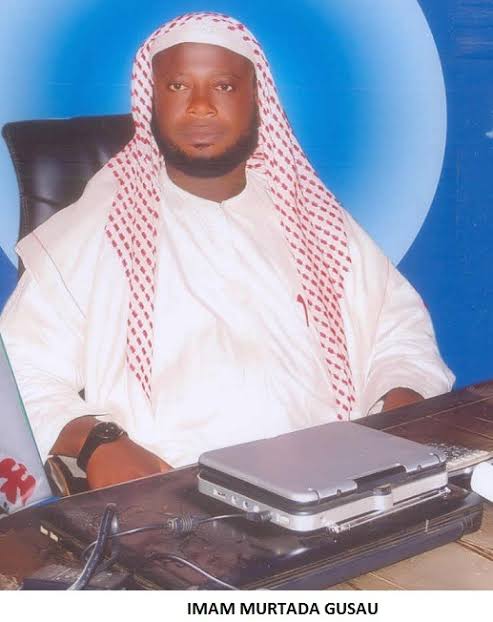
By Imam Murtadha Gusau
In the Name of Allah, the Most-Merciful, the Ever-Merciful
Alhamdulillah. All praise belongs to Allah, the Sustainer of the worlds, who created us into nations and tribes so that we may know one another. I bear witness that there is no deity worthy of worship except Allah, and Muhammad (Peace be upon him) is His servant and final Messenger, who built the most just civilisation from the dust of tribal warfare. To proceed:
Dear brothers and sisters! Our nation clocks 66 years of independence. We look around us and we see a land fractured by trial, economic hardship, and testing security. Many are tired. Many have lost hope. But remember, Islam forbids despair. Allah Almighty tells us in the noble Qur’an:
“And despair not of the relief of Allah. Indeed, no one despairs of the relief of Allah except the disbelieving people.” [Qur’an, 12:87]
Nigeria is not an accident. Our vast lands, our resilient youth, and our staggering diversity are signs of Allah’s creative majesty. But a nation does not grow strong by mere sovereignty; it grows through Amanah—Sacred Trust. Political offices, public resources, commercial trading, and even our roles as parents and citizens are temporary trusts tested upon us by the Almighty Allah.
Nation-building is a divine obligation. Our beloved Prophet Muhammad (Peace be upon him) established the city-state of Madinah not by excluding others, but by building a covenant of mutual responsibility, justice, and absolute integrity. If we want Nigeria to change, the change begins in our hearts, in our marketplaces, in our homes and in our offices. True patriotism is an extension of Iman (faith). We must give our country its due right: truthfulness, discipline, and justice.
Respected brothers and sisters! We often complain that things are broken, but have we forgotten the ultimate weapon of the Muslim believer? Du’a (Prayer). Prophet Muhammad (Peace be upon him) said:
“Du’a is the weapon of the believer, the pillar of religion, and the light of the heavens and the earth.”
Do not underestimate a single tear dropped in the dark of the night for this country. When His Eminence, the Sultan of Sokoto called upon the nation to offer Qunut, a special supplications during trials, it was a reminder that when human systems falter, the Divine Door remains open. We pray not as an escape from work, but to fuel our work. We pray for leaders to receive wisdom, and we pray for citizens to receive patience and prosperity.
In a quiet corner of a bustling neighborhood in Kaduna, an elderly woman named Maman Amina knelt on her prayer mat. It was the night before October 1st. The house was completely dark due to power grid issues, and the distant sound of security patrols echoed in the cold air.
Maman Amina’s joints ached. She had lived through 66 years of Nigeria’s history. She remembered the ecstatic joy of 1960; she had wept through the dark years of the civil war, and now, she was watching her grandchildren struggle just to find a single meal or a secure job.
Her grandson, Ahmad, a brilliant university graduate who spent his days doing menial labour, walked past her room and saw her crying intensely in her prostration (Sujud).
When she finally gave the Taslim and wiped her tears, Ahmad sat beside her. “Mama,” he said softly, bitterness dripping from his voice. “Why do you waste your tears praying for bad country called Nigeria? Look at us. Sixty-six years, and the clouds only seem to get darker. The country is broken.”
Maman Amina took his rough, young hands into her frail ones.
“My son,” she whispered, her eyes glowing with an ancient, unshakeable Iman (faith). “When Prophet Ibrahim (AS) left his wife and infant child in a barren, burning desert valley with no water, no food, and no civilisation, what did he do? He didn’t curse the sand. He didn’t abandon the land. He raised his hands to the heavens and made a Du’a:
“O my Lord, make this city a place of security and provide its people with fruits…'” [Qur’an, 14:35]
She leaned closer. “Ahmad, today, that barren valley became Makkah—the center of the world’s blessing and mercy. Wallahi, our prayers for Nigeria are not empty words. They are seeds. I may not live to see the shade of the tree, but you will. If we stop praying, we pull away the spiritual canopy protecting us from our own shortcomings, failings and sins. Work with your hands during the day to build this land, Ahmad, but fight for it on your knees at night.”
Ahmad looked down, the hardened ice around his heart melting. For the first time in years, he felt a spark of something long forgotten: Hope!!!
We are a nation of unmatched brilliance, yet bogged down by systemic challenges; a people deeply religious, yet desperately needing our faith to translate into structural ethics. As we mark this milestone, we must realise that Nation-building is an active, structural worship (Ibadah).
No nation was ever built on passive wishes. The great Islamic civilisation was forged by Islamic scholars, medical doctors, security agents, engineers, labourers, and leaders who viewed their professional duties as a direct accountability to Allah.
Governance is not a trophy; it is a heavy debt to be paid in justice and equity. We must stop waiting for a flawless system to arrive before we choose to act with integrity. Honesty in our commercial transactions, punctuality in our workplaces, and choosing community cohesion over tribal bigotry are the bricks of a new Nigeria.
Prayer is not a substitute for effort; it is the ultimate catalyst. A community that prays together binds its hearts together. When millions of voices raise their hands in unity—transcending geographic zones, language barriers, and religious divides—it builds an unbreakable social fabric. Du’a gives us the moral stamina to keep pushing forward when public policies fail. It reminds us that above the decisions of flawed humans sits the perfect decree of Allah, Al-Adl, The Utterly Just.
Nigeria will not be built by cynics. It will be built by those who see the current clouds, roll up their sleeves to build the foundation, and confidently beg the Almighty Allah to send the rain of prosperity.
Dear brothers and sisters! Know that, a nation is not built by passive onlookers. It is built by those who sweat in the daytime and pray in the deep of the night.
For example, look at the blueprint left by our beloved Prophet Muhammad (Peace be upon him) when he migrated to Madinah. He did not just build a Mosque; he established the Constitution of Madinah, uniting Muslims, Jews, and pagan tribes under a banner of mutual defense, religious freedom, and civic duty.
He taught us that a true citizen is one who removes harm from the road, feeds the hungry, and ensures their neighbour does not sleep empty-handed.
Know that, nation-building is an act of Ibadah (worship). Your daily work—whether you are a teacher, a street sweeper, an engineer, a medical doctor, a security agent, or a leader—is your jihad to elevate the Ummah and humanity.
Let us shed the paralysing cloaks of cynicism and complaints. Do not ask what your nation can do for you while your own hands are idle. Plant your seed, even if you know tomorrow is the end of the world.
Respected brothers and sisters! When the Companions (Sahabah) migrated from Makkah to Madinah, they arrived as penniless refugees. Their beloved leader, Prophet Muhammad (Peace be upon him) did not build refugee camps; he paired each migrant (Muhajir) with a local resident (Ansar) in a bond of brotherhood. They shared their homes, lands, and businesses. This single, creative stroke of social engineering wiped out poverty, eradicated tribal racism, and laid the economic foundation of a superpower overnight.
Fellow Nigerians! The second Caliph of Islam, Umar Ibn al-Khattab, would walk the streets of Madinah at night while his citizens slept, checking on their well-being. One night, he found a mother boiling stones in water just to quiet her starving children to sleep. Umar wept, rushed to the state treasury, and personally carried a heavy sack of flour and oil on his back. When his servant offered to carry it, Umar replied:
“Will you carry my sins on the Day of Judgment?”
He understood that true nation-building means the leadership serves the vulnerable first.
Dear servants of Allah! Excellence (Ihsan) is an Islamic mandate. Be the absolute best in your professional field to elevate your society’s self-reliance. Refuse to participate in bribery, nepotism, or cheating. A clean society begins with individual refusal to compromise. Emulate the Prophet Muhammad (Peace be upon him), who gave immense leadership responsibilities to young people like Usamah Bin Zaid and Ali Ibn Abi Talib.
Treat your city’s infrastructure, parks, and roads with the same sanctity you treat your own home.
Dear brothers and sisters! Wallahi, true nation-building begins in the hearts of its citizens and is fueled by their devotion to both work and prayer (Du’a). A thriving society is not built merely on concrete, steel, or economic policies. It is anchored in spiritual integrity, justice, and collective responsibility.
The noble Qur’an reminds us of our core civic duty:
“Let there arise out of you a band of people inviting to all that is good, enjoining what is right, and forbidding what is wrong…” [Qur’an, 3:104]
We cannot sit idly by, complaining about the fracturing of our communities, while withholding our own hands from the bricks of progress. Every honest transaction, every piece of litter picked up from the street, every child taught with patience, and every neighbour supported is an act of nation-building. It is an act of Ibadah (worship).
We often make the mistake of separating the physical from the spiritual. But true progress requires two hands: the hand of effort (Amal) and the hand of prayer (Du’a). To build a nation, we must utilise both: We must work with excellence (Ihsan). A nation cannot rise if its people are complacent, corrupt, or lazy. We must fall to our knees and beg the Almighty Allah for guidance, protection, progress, peace and unity.
Du’a is not the last resort of the defeated; it is the ultimate weapon of the Muslim believer. It is the spiritual fuel that transforms raw human effort into lasting legacy.
Centuries ago, in a city plagued by economic hardship and social decay, lived an elderly craftsman named Yusuf. The city’s infrastructure was crumbling, crime was rising, and the people had lost hope. They blamed the leaders, the economy, and each other.
Every evening, while others gathered in the marketplace to vent their frustrations, Yusuf would walk to the edge of the city where the main defensive wall was deteriorating. Brick by brick, with his aching hands, he began to rebuild it.
“Why do you waste your energy, old man?” the youth mocked him. “One wall won’t fix a broken kingdom.”
Yusuf paused, wiped the sweat from his brow, and smiled. “I am not fixing the kingdom. I am fixing this wall. If everyone fixed their own wall, the city would be impenetrable.”
But Yusuf did not rely on his strength alone. Every night during the final third of the night (Tahajjud), when the world was silent, Yusuf would prostrate. With tears streaming into the dust, he cried: “O Allah, protect this city. Soften the hearts of our leaders. Unite our people. Use my weak hands to bring about strong change.”
Years passed. A sudden, massive invading force marched toward the city. The citizens panicked, realising they had no defenses—except for the eastern sector, where Yusuf’s sturdy, rebuilt wall stood. Because of that single, fortified wall, the city held its ground, giving the citizens enough time to unite, defend themselves, and drive back the threat.
Fellow Nigerians! The city survived not because of a massive army, but because one man paired his physical labour with relentless, heartfelt Du’a and prayer!
In the modern discourse on political and social reform, the spiritual dimension is frequently ignored. We analyse data, restructure institutions, and debate policies. While these are necessary, but they lack a soul without Du’a.
The Prophet Muhammad (Peace be upon him) said:
“Du’a is the very essence of worship.” [Tirmidhi]
Respected brothers and sisters! Wallahi, Du’a is a radical act of transformation. When the Ummah raises its hands together in supplication, several profound shifts happen simultaneously:
- Shift from Despair to Hope: A nation that prays is a nation that believes tomorrow can be better than today. Despair paralyses a society; Du’a activates it.
- Alignment of Hearts: It is impossible to genuinely pray for the well-being of your nation while harbouring hatred for your fellow citizens. Du’a fosters empathy, weaving individual hearts into a collective fabric.
- Divine Blessing (Barakah): Human effort alone is limited. When Divine blessing enters a nation’s economy, education, and leadership, small efforts yield monumental results.
If we want to see our communities thrive, we must change our relationship with prayer. We must move away from passive, ritualistic phrases and move toward deeply emotional, specific, and burning supplications for our societies.
Do not just pray for your personal wealth; pray for the eradication of poverty in your city.
Do not just pray for your own children; pray for the guidance and safety of the youth in your entire nation.
Change begins when we realise that the fate of our nation is tied directly to the sincerity of our prayers and the integrity of our labour.
True nation-building is not merely an exercise in pouring concrete, laying tarmac, or inflating economic indicators. It is the architectural alignment of human character with Divine justice..
As mentioned earlier, when the Prophet Muhammad (Peace be upon him) migrated to Madinah, his first actions were fundamentally civic yet profoundly spiritual: he established a place of worship, the Masjid, formed a covenant of brotherhood between disparate tribes, and drafted a constitution to protect the rights of all citizens.
This proves a vital truth: a society cannot stand tall if its moral spine is broken. We cannot build a strong nation with weak bricks. If our citizens lack integrity, if our leaders lack accountability, and if our youth lack purpose, no amount of material wealth can save our civilisation from internal decay.
To build a resilient nation, Islam demands a dual approach: outward striving (action) and inward seeking (supplication).
Many mistake Du’a (supplication) for the weapon of the helpless, a last resort when all else fails. In reality, Du’a is the ultimate weapon of the Muslim believer and the very catalyst for systemic change.
Consider the profound history embedded in the foundations of the Ka’abah. When Prophet Ibrahim and his son Prophet Ismail were raising the stone walls of the House of Allah in a barren, desolate valley, they did not just rely on their physical labour. As they laid the bricks, they raised their hands and cried out:
“Our Lord, accept this from us. Indeed You are the Hearing, the Knowing… Our Lord, and make us Muslims submissive to You and from our descendants a Muslim nation submissive to You…” [Qur’an, 2:127-128]
That single, sincere Du’a in an empty desert birthed a civilisation that changed the course of human history. Prophet Ibrahim (AS) understood that while human hands build the infrastructure, it is Allah’s grace that breathes life, security, and prosperity into a nation.
True reliance on Allah requires tying your camel before leaving it. We cannot make Du’a for a prosperous nation while refusing to pay taxes, littering the streets, taking bribes, or neglecting our duties.
The Prophet Muhammad (Peace be upon him) spent the night before the Battle of Badr in weeping, desperate Du’a until his cloak fell from his shoulders. Yet, the next morning, he put on his armour and led his companions onto the battlefield. Prayer is not an excuse to avoid work; it is the fuel to perform it.
Shift your prayers from purely individualistic desires to the collective welfare. Pray for your leaders to be guided to justice, pray for your economy to be blessed, and pray for the safety of your borders. When we pray for our nation, we ensure a stable environment where our children can thrive, worship freely, and live with dignity.
A powerful nation is not measured by the height of its skyscrapers, but by how it treats its most vulnerable. It is measured by the honesty in its marketplaces, the justice in its courts, and the sincerity in its prayers.
Let us be the architects of a society built on the bedrock of faith and the scaffolding of hard work. Lift your hands in the dark of the night to ask for guidance, and roll up your sleeves in the light of the day to build the future.
No doubt, nation-building begins with the transformation of the individual soul. True societal progress is not merely measured by skyscrapers or economic indexes, but by the moral fiber, justice, and collective consciousness of its people.
Allah the Most High says:
“Indeed, Allah will not change the condition of a people until they change what is in themselves.” [Qur’an, 13:11]
A powerful nation is built upon a foundation of divine values, civic responsibility, and unyielding justice.
A nation cannot survive on tyranny. Islamic history shows that a society’s strength relies on upholding justice for all, regardless of status, race, or creed.
Active citizenship means promoting the common good and courageously standing against corruption, apathy, and systemic harm.
Leadership is a sacred trust. When public servants and citizens prioritise integrity over personal gain, institutions flourish.
A nation thrives when it channels the unique strengths of its diverse populations toward a singular, noble vision.
Finally, Fellow Nigerians! Be the Nigeria You Pray For!
We pray for a peaceful Nigeria. A just Nigeria. A united Nigeria.
However, your Duʿa should inspire action. As a Muslim, let your faith show in how you serve, build bridges, uphold justice, and treat your neighbours. Don’t just pray for a better Nigeria. Help build one.
Ya Allah, Lord of Majesty and Might, We bring before You our beloved nation, Nigeria, at 66 years of age. We thank You for preserving us through the storms, for keeping our borders intact, and for granting us resilience.
Ya Allah, Al-Hadi, The Guide, Guide our leaders—from our President to our local counselors. Plant inside their hearts the fear of Your judgment, an unyielding love for justice, and the wisdom to heal our economy and protect our borders. Remove corruption from our pillars and replace it with transparency.
Ya Allah, As-Salam, The Source of Peace, Rain down peace upon our communities. Disarm the bandits, frustrate the plots of the terrorists, and secure our highways, our schools, and our homes. Knit our hearts together across every tribe and tongue, making our differences a beautiful strength rather than a tool for division.
Ya Allah, Al-Razzaq, The Provider, Look upon the households struggling with the cost of living. Open the gates of sustenance from the heavens and the earth. Grant our youth opportunities, knowledge, wisdom, and clean success so that they may build a brighter tomorrow.
Do not let our past mistakes define our future. Make Nigeria a land of equity, safety, and joy. O our Lord, accept our prayer.
May Allah bless Nigeria and make us part of its healing and progress. Ameen Ya Hayyu Ya Qayyum!
All praise is due to Allah, Lord of the worlds. May the peace, blessings and salutations of Allah be upon our noble Messenger, Muhammad, and upon his family, his Companions and his true followers.
Murtadha Muhammad Gusau is the Chief Imam of Nagazi-Uvete Jumu’ah and the late Alhaji Abdur-Rahman Okene’s Mosques, Okene, Kogi State, Nigeria. He can be reached via: gusauimam@gmail.com or +2348038289761 or +2348024192217.
This Jumu’ah Khutbah (Friday sermon) was prepared for delivery today, Friday, Rabi’ul Thani 20, 1448 AH (Octorber 02, 2026).