
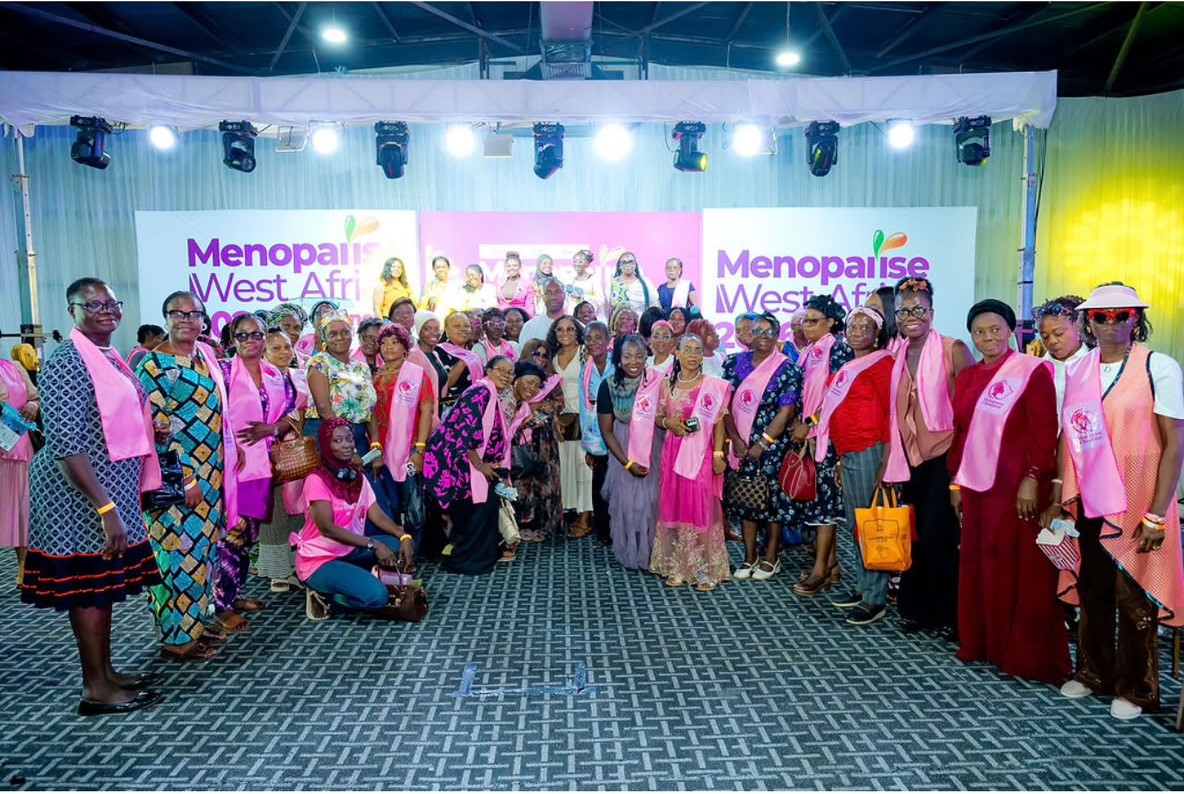
Menopause West Africa has called for stronger institutional frameworks, accessible health education and community-led support systems to help women navigate menopause with dignity and confidence.
The call followed a conference held on October 24 at the Landmark Event Centre in Lagos. The event brought together healthcare professionals, corporate executives, public health leaders, wellness experts and community advocates to address menopause as a health, workplace and social issue across West Africa.
Speaking at the opening, Clifford Okwesi, Chairman of the Menopause West Africa Organising Committee, said there was an urgent need to challenge the stigma surrounding midlife women’s health.
He said women should not have to navigate menopause in silence and urged stakeholders to take credible information into communities, encourage open conversations and work with healthcare professionals, employers, women’s organisations and public institutions to improve access to support.
The conference featured contributions from medical and public sector leaders, including Professor J.I. Brian-D Adinma, President of the Association of West African Societies of Obstetrics and Gynaecology (AWASOG) and former Abia State Commissioner for Health, who led an interactive medical masterclass.
Dr. Abosede Wellington, Director of Family Health and Nutrition at the Lagos State Ministry of Health, represented the state Commissioner for Health, Professor Emmanuel Akinola Abayomi.
Lauren Chiren, a UK-based menopause advocate and founder of Women of a Certain Stage, shared an international perspective on introducing formal menopause policies and training managers to support employees experiencing menopause.
Nollywood veteran Patience Ozokwor also urged women to learn about menopause before experiencing it, while calling for open conversations between generations in families and communities.
As part of efforts to translate awareness into community action, the conference inaugurated 100 Menopause Champions to lead local outreach initiatives. Organisers also announced plans to partner with 3,000 places of worship across Nigeria to provide reliable menopause information through established community networks.
Workplace support and institutional responsibility featured prominently during a panel discussion moderated by Ijeoma Thomas-Odia, Editor of Guardian Woman.
The panel included Dr. Funmi Daramola of Renaissance Africa Energy Company, Dr. Jumoke Aleoke-Malachi of Wema Bank and Mrs. Uchenna Ogwo of the International Federation of Women Lawyers (FIDA Nigeria).
The speakers urged employers to recognise menopause support as an important part of workplace wellness, staff retention and gender equity.
The conference also received support from professional and civil society organisations, including the National Council of Women’s Societies, FIDA Nigeria, the Customs Officers’ Wives Association, the Medical Women’s Association of Nigeria and the Women Discipleship Network.
Beyond policy discussions, the event featured interactive sessions on different aspects of women’s wellbeing. The Pause & Flourish Lounge offered guidance on skincare, nutrition, mental health and physical activity, with contributions from clinical psychologist Oluwagbemisola Osoba and movement coach Saula Babatọpe.
Event sponsor MenoFix distributed 1,000 herbal capsule kits to attendees, while Women Radio (WFM) hosted the Pure Stories Studio, where participants shared personal menopause experiences for a public archive.
Menopause West Africa said it would build on the conference through expanded corporate training programmes, increased faith-based outreach and partnerships with regional health ministries.
The organisation said the next phase would focus on sustaining public awareness and strengthening the support available to women navigating menopause across the region.