
By KosofePost Reporter
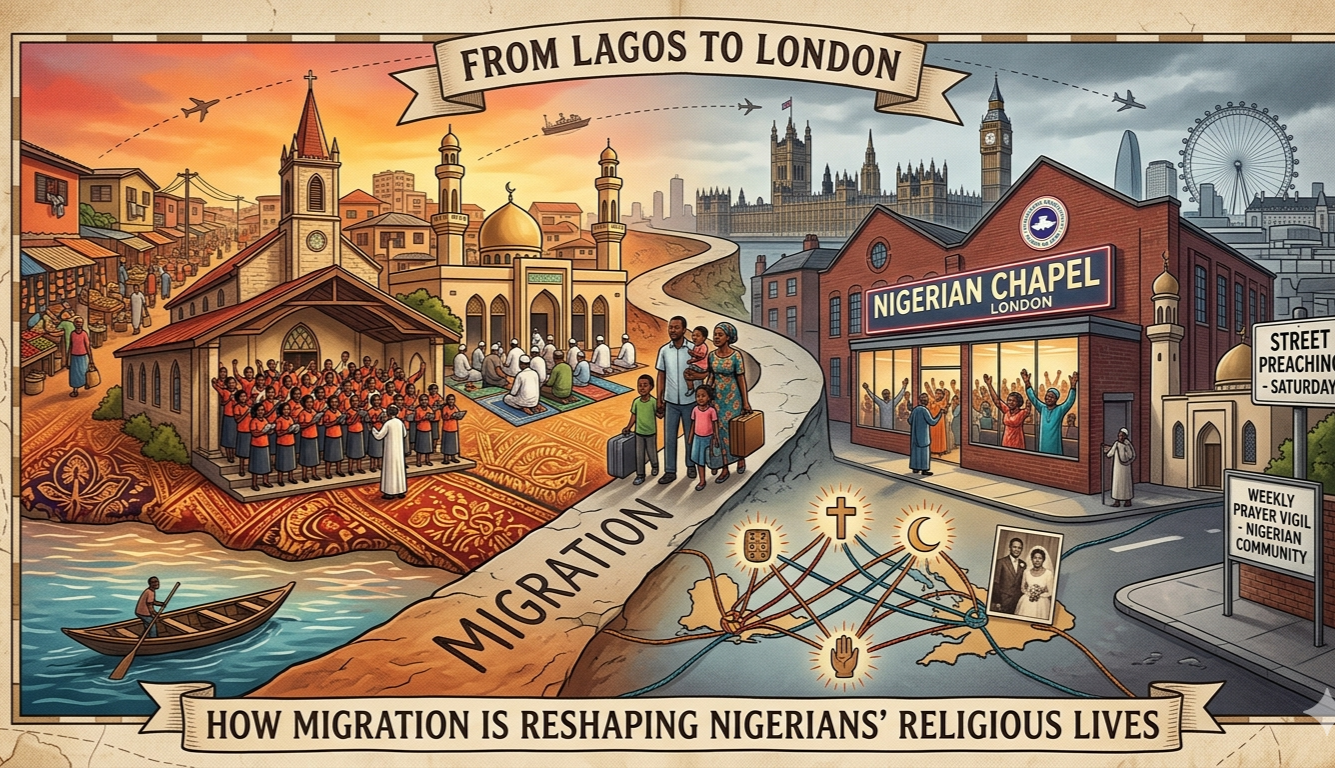
For many Nigerians, relocating from Nigeria to the United Kingdom represents more than a change in geography; it often signals a profound shift in lifestyle, social expectations, and, for some, religious practice.
A recent conversation within an online community of Nigerians in the UK offered insight into this changing spiritual reality after a member posed a simple but revealing question: “Is your religious life still the same as it was in Nigeria?”
The discussion sparked reflection on how migration, exposure to structured systems, and changing social conditions are reshaping faith among members of the Nigerian diaspora.
From Public Devotion to Private Faith
In Nigeria, religion often occupies a highly visible place in everyday life. Faith communities frequently serve not only spiritual purposes but also social, emotional, and economic support functions within an environment marked by uncertainty and institutional gaps.
However, some contributors to the discussion argued that life in the UK alters the practical role religion plays in daily survival.
One contributor, Afeez Olayinka Salau, argued that aspects of religious intensity in Nigeria are closely tied to the country’s social and institutional realities.
“Most religious life back home is a scam because the system easily corrupts you—even religious leaders. Here, the system will make you holy by force because there are consequences,” he wrote.
Though strongly worded, the comment echoed a recurring sentiment among contributors: that stronger institutions, clearer regulations, and functioning public systems in the UK reduce the dependence on religious intervention for everyday challenges.
The “System” and Accountability
Participants noted that practical systems in the UK—from employment structures to legal accountability—often shape behaviour in ways traditionally associated with moral or religious discipline.
Rather than relying heavily on prayer for outcomes linked to jobs, housing, or daily logistics, some contributors suggested that many migrants begin to approach faith differently, shifting from a survival-oriented spirituality toward a more personal belief system.
Others observed that religious authority itself often changes in diaspora settings. Without the same social pressures or highly influential religious hierarchies seen in Nigeria, congregants may become more questioning, independent, and selective in how they engage with faith leaders.
A Different Expression of Faith
Still, contributors stressed that migration does not necessarily weaken religious commitment. Instead, many described a transition from highly visible or communal expressions of faith toward quieter, more personal forms of spirituality.
For some Nigerians abroad, long work schedules and changing social realities reduce participation in the intense rhythm of religious activities common in Nigeria. For others, the absence of social expectations surrounding public religiosity creates space for what they describe as a more intentional and authentic relationship with faith.
The discussion ultimately highlighted a broader question facing many migrants: whether relocation changes belief itself or simply transforms how belief is practiced. For many Nigerians in the diaspora, religion appears not to disappear, but to evolve alongside new systems, responsibilities, and realities.