
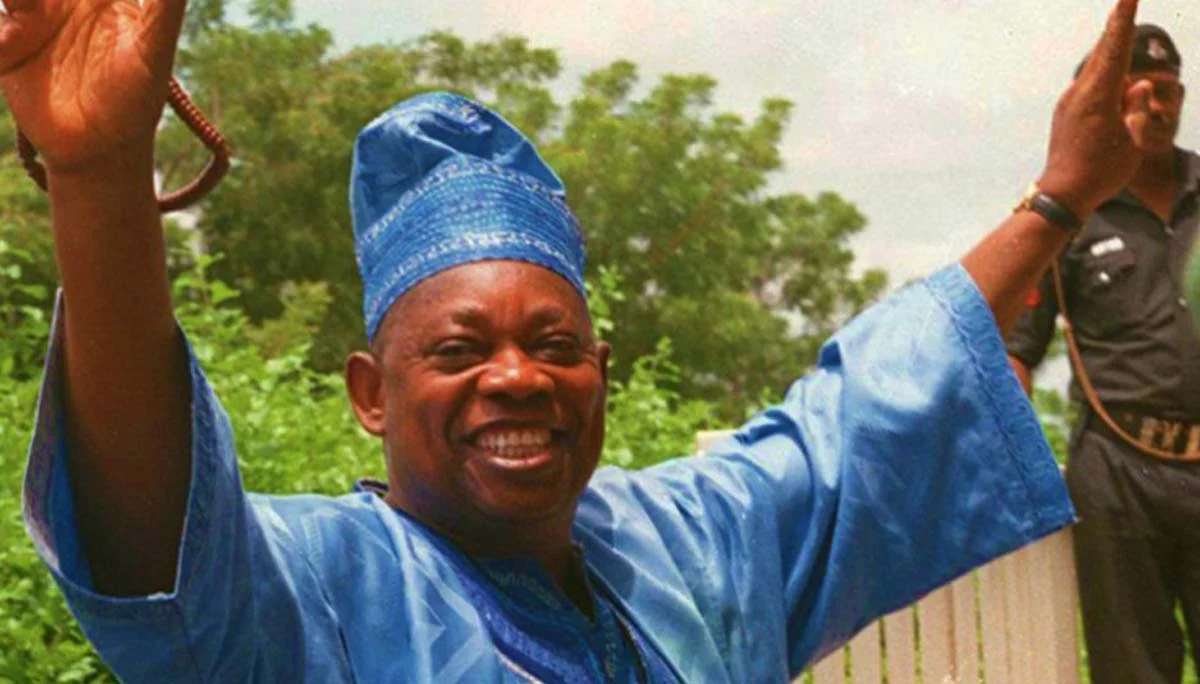
June 12 is not just a date on the calendar. It is a reminder.
It is a reminder that democracy is not free. It was paid for with brains and ballots, with boldness and blood, with broken dreams and unbroken hope. On June 12, 1993, Nigerians spoke with one voice. That voice was bruised and brutalized, stifled and silenced, but it was never killed. It hibernated, and today it multiplies.
As we mark twenty-seven unbroken years of civilian rule, the core lesson of June 12 remains absolute: Votes have weight. Unity has power. Silence loses. Voice wins.
However, we must confront an uncomfortable truth, captured powerfully by Senator Shehu Sani:
“The National Anthem cannot unite a nation. A National Pledge cannot unite a nation. A Constitution cannot unite a nation. A nation is united by the ideals of freedom; a nation is united by equity and justice.”
In his national broadcast this morning, President Bola Ahmed Tinubu observed that while the generation of June 12 secured political freedom, our defining responsibility today is to secure economic freedom. The President rightly asserted that democracy must be felt in the quality of people’s lives—in opportunities for youth, prosperous farmers, successful entrepreneurs, and the dignity of our workers.
As Progressive Democrats, we agree entirely with this paradigm. But we must be candid: economic freedom cannot exist in a vacuum. It is structurally impossible to achieve sustainable economic prosperity where systemic injustice, selective law enforcement, and disproportionate political representation remain the order of the day.
1. The Intersection of Economic Dividends and Institutional Justice
While the federal administration rolls out macroeconomic metrics—citing increased federation revenues, the structural overhauls of the Electricity Act, and the deployment of ten thousand tractors via the National Agricultural Development Fund—we must ask the uncomfortable questions demanding answers on the street:
Has this increased revenue delivered a better life to the common man? Are we seeing or enjoying the fruits of these ten thousand tractors on the field? Are food items natively cheaper or more affordable in our markets?
The harsh reality on the ground answers with a resounding NO. Daily life tells a story of severe inflation and crushing hardship for the ordinary citizen. Institutional corruption and systemic injustice remain the true bane of our political economy.
Democracy must indeed be felt in the pocket, but it must first be anchored on absolute institutional integrity. Justice must not be selective. The law must never be applied based on religion, ethnicity, political affiliation, or status. Justice is the bedrock of peace, and the rule of law is the shield that protects every citizen from oppression. No individual or group is above the law; every person found guilty of criminal conduct must face impartial justice through due process.
2. Security, Decentralized Policing, and the Armed Private Sector
The President noted with concern the recent tragic abductions of our children in Oyo and Borno States. While we applaud the record ₦5.41 trillion allocation to defense and the ongoing recruitment of over fifty thousand police officers, democracy without secure communities is an illusion. We echo the President’s declaration that crime has no ethnicity, and we demand an immediate, careful end to any form of systemic profiling.
To breathe real life into Nigeria’s security architecture, we support the immediate and rapid implementation of state and community policing across the federation. Centralized policing has failed to adapt to the hyper-local security challenges plaguing our unique terrains. For a state like Ondo, there should be an irreducible minimum addition of 18,000 personnel—1,000 per Local Government Area—to properly secure the state. This requires a rapid, proactive, and preventive commitment to forestall insecurity before it strikes.
Furthermore, we call for an immediate legislative amendment to the Private Guard Act to legally permit registered, structured private security firms to deploy preventive technology, carry light weapons, and actively collaborate with public agencies. Security can no longer remain a state monopoly that leaves communities defenseless. By empowering structured private security alongside local police forces, we create an overlapping shield of safety for our farmers, our children, and our traders.
3. A Local Manifesto for the Grassroots: The People’s Call
To Aheri Ward, to Ilaje Local Government Area, to the Coast Constituency, to Ondo South, and the entirety of Ondo State: June 12 teaches us to transition from passive loyalty to strategic engagement.
The federal government has devolved power to the states to generate, transmit, and distribute electricity, yet our coastal communities and southern districts remain plunged in historical darkness. If infrastructure is a democratic dividend owed to every Nigerian, our people must see these projects manifest on the ground. Do not just deliver votes; defend your victory and demand your respect. Insist on infrastructural development and political representation that is strictly commensurate with your electoral contribution. Hold your ground against both local oppression and institutional neglect.
To Sowore and fellow Southern brothers and sisters: charity begins at home. While eyes are locked on the politics of Abuja, we must refocus and fix our gaze on Akure. Come back home to Ikale; come home to the Coast. When we anchor our national struggles in local realities, our advocacy becomes more meaningful, result-driven, and built sustainably from the bottom up. Now is the best time.
Cowards die many times before their death. We must rise for our local political and economic freedom. When you see something, say something. Do not lose in silence; wisely lend your voice.
4. To the Youth: Build, Code, and Force Accountability
The President addressed the youth directly, urging them to stay, innovate, build, code, and vote here. We embrace this charge, but with a crucial caveat: in a state where the diversion of public benefits grows in geometric progression and opportunities seem to have closed addresses, survival is tough. For our brilliant young minds to stay and build, the political environment must be clean, safe, and transparent.
We call on our young people across Ondo State and Nigeria to stay—not to endure bad governance in silence, but to drive active citizenship, deploy technology for civic transparency, and openly disrupt the old political status quo through positive civil action and measurable impact. Concurrently, the government must create and use structural avenues where tech-driven civic tracking is actively integrated into the fabric of governance.
5. Engineering a Competitive Economy to Crash Prices
On a final and decisive note, true economic freedom requires a radical shift in how the state handles market competition. The current inflation crushing our people can only be defeated by aggressively driving an economy designed to break down the skyrocketing costs of fuel, transportation, food, healthcare, and building materials.
We must deploy a pragmatically engineered, hybrid economic framework:
- The Antitrust Weapon: We must emulate the United States model, where the state actively uses antitrust laws and strategic interventions to break up private cartels, eliminate artificial scarcity, and foster fierce private sector competition.
- The State-Backed Competitor: Simultaneously, we must adopt elements of successful developing models like China’s by running robust, high-performance, state-backed companies to directly compete in critical sectors.
Crucially, this requires completely rejigging and tightening the administration of our Anti-Corruption and Financial Crimes agencies to focus on the absolute prevention of mismanagement.
The government cannot sit back as a passive regulator while private monopolies manipulate the prices of oil, transport, housing, and essential medications. By establishing and funding highly efficient state-backed enterprises in public transport, food distribution, and pharmaceutical manufacturing, the government can directly force down prices through healthy market competition. When state-backed transport fleets and food reserves compete directly on the open market, artificial scarcity dies, and prices naturally plummet.
For the benefit of our younger generations, let us remember the resilient soul of our nation, as captured by Senator Shehu Sani:
”Many younger generations today have not and could not know the sacrifices made to restore democracy to this country… This democracy was not a gift given by the military; it was not a lottery that was won; it was a product of struggle and sacrifice.”
As a student activist, I was in that heat. June 12 was crushed, but it was not conquered. Hope was delayed, but it could not be denied. Let this Democracy Day be our definite turning point. We call on leaders at all levels to genuinely put the “PEOPLE FIRST,” protect the vulnerable, and ensure that justice is clearly seen to be done.
Nigeria will be well. But well-being in a democracy is not wished for; it is engineered by resilient citizens who refuse to remain silent.
Happy Democracy Day. God bless Nigeria.
Aluta Continua — Victoria Ascerta!
Ayanfe Omojuwa (MIHSD)
State Secretary, The Progressive Democrats (PRODEM), Ondo State.
Writes from Akure.