
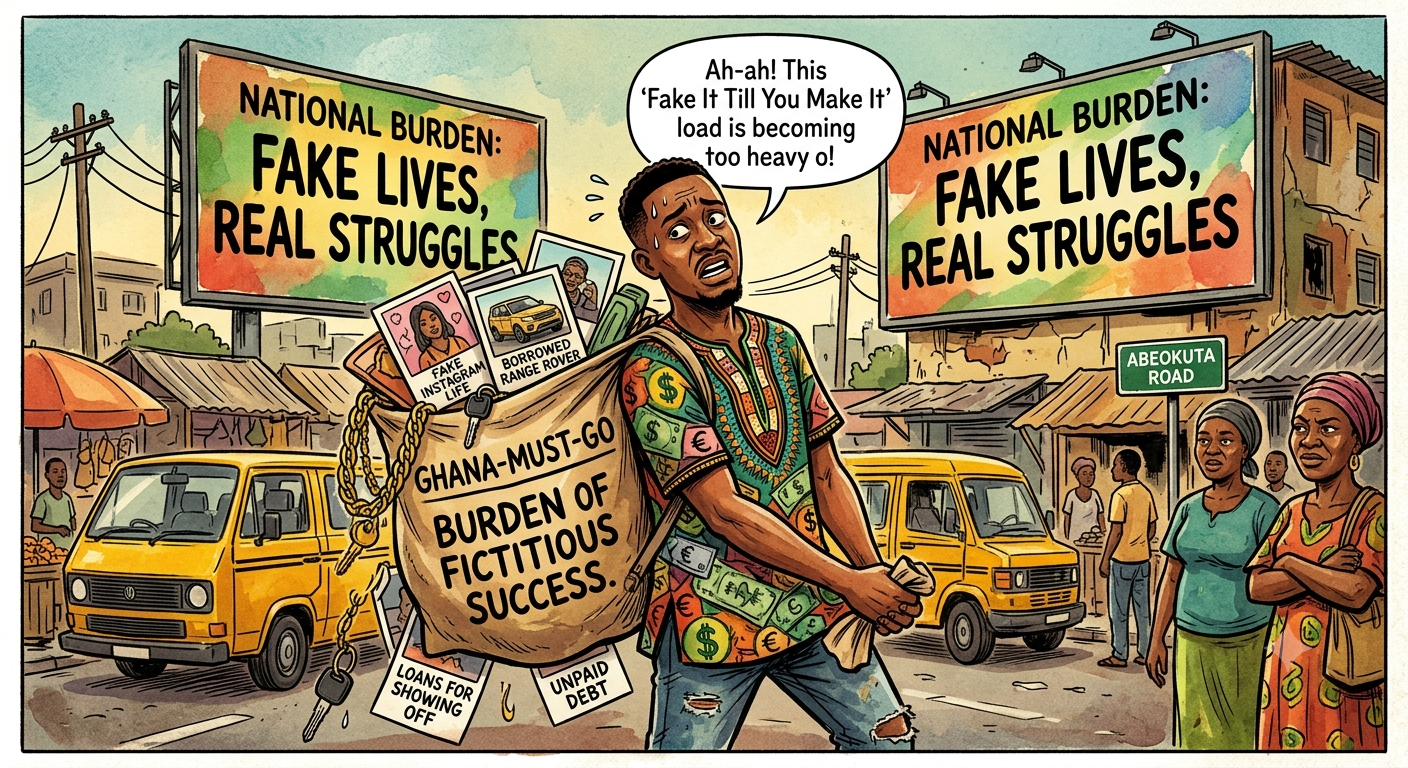
In modern Nigeria, the line between ambition and illusion has become increasingly blurred. “Fake it till you make it” was once offered as pragmatic career advice—a reminder to project confidence even when you felt underprepared. Today, however, it has evolved into something far more troubling: a social pressure to perform success, even when reality tells a different story.
We have gradually turned curated social status into a measure of human worth, creating a society where appearance often matters more than substance.
The mechanics of this manufactured existence are as meticulous as they are exhausting. It is the young professional navigating muddy, under-resourced streets with shoes protected from the dirt, only to switch to a luxury ride-hailing service for the final stretch so that onlookers see only the polished arrival. It is the long-standing practice of borrowing expensive cars, renting designer clothes or staging elaborate lifestyles simply to command respect at social gatherings.
On social media, carefully selected photographs can create the impression of life in a highbrow neighbourhood, while the reality outside the frame may involve unpaid rent, mounting bills and financial uncertainty.
The constant performance can become a cycle of validation. The admiration of strangers offers temporary satisfaction, but maintaining the illusion requires increasingly greater sacrifices. Some take expensive loans to finance lifestyles they cannot afford. Others accumulate debts simply to preserve an image of prosperity.
Eventually, the facade becomes difficult to sustain. And when reality catches up, the resulting shame can produce isolation, hopelessness and serious emotional distress. In a culture where the Yoruba expression “Iku ya ju ẹ̀sìn” reflects the devastating weight placed on shame, the fear of public exposure can become dangerously overwhelming for some people.
But this crisis should not be reduced to individual weakness or poor financial decisions. It is also a symptom of an economic environment where basic needs are becoming increasingly difficult to afford while social expectations remain relentless.
We are creating a society in which people can be struggling financially, emotionally and psychologically while simultaneously feeling compelled to convince everyone around them that they are doing exceptionally well. The result is a largely invisible population suffering behind carefully constructed appearances and afraid that seeking help will expose the reality they have worked so hard to conceal.
This demands more than lectures about personal responsibility. Nigeria must rethink how mental healthcare is delivered.
Mental-health services cannot remain concentrated primarily in specialist psychiatric facilities and major urban centres. Primary Health Care facilities should become important entry points for early mental-health support, with adequately trained health workers, referral systems and accessible psychological services capable of identifying distress before it becomes a crisis.
At the same time, we must confront the social culture that fuels the pressure.
Success should not be measured by the car someone drives, the neighbourhood where they claim to live, the designer clothes they wear or the lifestyle they display online. There is nothing inherently wrong with aspiring to comfort or celebrating genuine achievement. The problem begins when appearances become more important than wellbeing and when people feel compelled to destroy their financial and emotional stability merely to convince strangers that they have “made it.”
Perhaps we need to retire the culture of “fake it till you make it” and replace it with something healthier: build what you can, live within your reality, and understand that your worth does not depend on convincing other people that you are successful.
Until we stop treating superficial displays of wealth as the ultimate measure of success, the human cost of our collective illusion will continue to rise.
By Bilesanmi Abayomi