
The Rulings Of Committing Indecent Acts Inside A Mosque!
By Imam Murtadha Gusau
Tuesday, October 20, 2026
In the name of Allah, Most Merciful, Bestower of Mercy.
Alhamdulillah. Praise be to Allah, Who established the Earth as a place of testing and designated His Houses—the Masajid—as sanctuaries of purity, remembrance, and humility. We bear witness that there is no deity worthy of worship except Allah, and that Muhammad (Peace be upon him) is His servant and messenger, who taught us the absolute reverence due to the symbols of Islam.
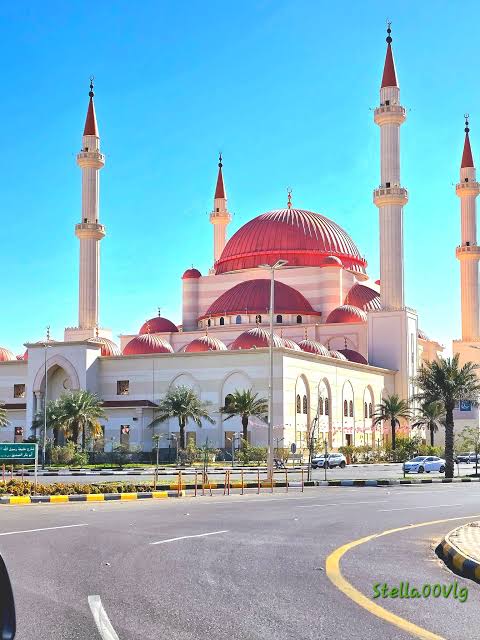
Dear brothers and sisters! Know that, the Mosque is not just a building of brick and stone; it is Baitullah—the House of Allah. It is the most beloved place on Earth to the Almighty, a sacred sanctuary designed exclusively for prayer, Zikr, and the recitation of the noble Qur’an.
To commit an indecent, immoral, or sinful act within these sacred walls is a profound psychological and spiritual transgression. It is a violation of Taqwa, Allah-consciousness and an explicit defiance of the divine boundaries.
Allah Almighty says in the noble Qur’an:
‘And He revealed that the Mosques are for Allah, so do not invoke with Allah anyone.’ [Qur’an, 72:18]
When you cross the threshold of a Mosque, you are leaving the chaotic illusion of the worldly life and entering the court of the King of Kings. You step in with your right foot, reciting: ‘O Allah, open for me the gates of Your mercy.’ How then can a Muslim believer enter this space of mercy only to pollute it with the darkness of sin? How can a soul look at the place where foreheads touch the dust in submission to Allah, and use it as a breeding ground for indecency?
Respected brothers and sisters! Realise the gravity of your location. Islamic jurists and scholars, including Imam Ibn Taimiyyah, have clearly emphasised that while a sin is always prohibited, a sin committed within a sacred time or a sacred place carries a multiplied, far more severe punishment and divine anger.
The Prophet Muhammad (Peace be upon him) warned us that even small, disrespectful actions—like spitting on the floor of a Mosque—is a sin that requires immediate expiation. If intentionally making the physical floor dirty is a sin, what then of the person who stains the spiritual atmosphere of the Mosque with obscene behaviour, lewdness, or secret sins?
Let us purify our hearts, guard our glances, and treat the houses of Allah with the ultimate reverence they deserve.
Islamic jurisprudence treats misconduct inside a Mosque with extreme seriousness. The legal frameworks classify these violations into several categories.
Sins committed inside a Masjid do not invalidate the building itself—the Mosque must never be closed or deactivated because an immoral act occurred there. However, the spiritual burden on the perpetrator is immensely heavy. Islamic scholars rule that committing an indecent act, such as theft, illicit relations, or severe verbal abuse inside a Mosque combines two massive violations: the sin itself, and the sin of violating the sanctity of Allah’s symbols.
By consensus (Ijma) of the major schools of Fiqh, a person who is in a state of Janabah or major ritual impurity due to sexual activity or emission or a woman experiencing menstruation is strictly prohibited from staying or sitting inside the prayer hall of the Mosque. Deliberately praying or occupying the space while severely impure, knowing it is forbidden, borders on mocking the religion and demands immediate repentance.
If an individual is caught committing indecent acts, causing fitnah, or shouting obscenities inside the Mosque, the community and Mosque authorities have the full right—and legal obligation—to admonish them, correct them, and if they persist, forcibly expel them from the premises. This is drawn from the analogy of the Prophet Muhammad (Peace be upon him) ordering those who harm others with foul odors, like raw garlic, to be removed to protect the congregation.
To understand how a true Muslim believer handles mistakes in the Mosque, we look at the famous psychological masterclass delivered by the Prophet Muhammad (Peace be upon him).
An authentic Hadith recorded in Sahih Muslim and Sunan Ibn Majah describes a Bedouin entering the Prophet’s Mosque. Lacking education and etiquette, the man walked to a corner of the prayer area, spread his legs, and began to urinate directly on the Mosque floor.
The Companions erupted in anger. They shouted, “Stop! Stop!”, drawing their weapons, ready to physically punish the man for this extreme act of desecration.
But the Prophet (Peace be upon him), possessing the deepest psychological wisdom, yelled:
“Leave him alone. Do not interrupt his urination.”
He understood that stopping the man mid-act would cause physical harm and spread the impurity even further across the Mosque. Once the man finished, the Prophet (Peace be upon him) called him over gently. He did not revile him, mock him, or strike him. Instead, he looked into his eyes and spoke directly to his soul. He said:
“Indeed, these Mosques are not suitable for any of this urine or filth. They are only built for the remembrance of Allah Almighty, prayer, and the recitation of the Qur’an.”
The Prophet (Peace be upon him) then ordered a bucket of water to be poured over the spot to purify the earth.
Respected brothers and sisters! Know that, the Mosque is a place of healing, not destruction. If an act of indecency occurs, it must be met with swift legal and physical correction to protect the sanctuary, but the ultimate goal must always be to guide the lost soul back to repentance.
For example, if your lower self or the whispers of Shaitan have ever pushed you to cross boundaries inside a Mosque, let this be the moment of your psychological awakening.
When you commit a secret sin or act indecently in public, you try to hide from people. But inside a Mosque, you are performing that act directly in front of the One who created you, inside the very building dedicated to His praise.
The Prophet (Peace be upon him) said that for every single step you take to the Mosque, one sin is wiped away and your status is elevated. Do not let the steps that brought you blessings be negated by the actions you commit once you arrive.
If a transgression has happened, do not let despair keep you away. The door to repentance is wider than the universe. Turn back to Allah today, cleanse your intentions, and protect the sanctity of the places that will bear witness for you on the Day of Judgment.
Dear brothers and sisters! If you can remember, on Wednesday, October 14, 2026, the Saudi Arabian Ministry of Interior carried out the death sentences of two Bangladeshi nationals, identified as Nazrul Islam Abdul Basir and Siti Akhtar, following their conviction for committing an immoral/sexual act inside a Mosque in the noble city of Makkah. The execution was implemented under Ta’zir (discretionary judicial punishment) after being upheld by the highest courts and authorised by a royal decree. The severe judicial reaction was justified by the court on the grounds of a flagrant violation of the sanctity of a sacred place and time.
The incident sparked significant diplomatic tension, as the Bangladesh Foreign Ministry and its consulate in Jeddah confirmed they received no prior notification or consular intimation regarding the trial, sentencing, or executions. The government in Dhaka has since sent a formal note verbale to Riyadh seeking a comprehensive account of the legal proceedings.
Dear servants of Allah! The Qur’an commands us:
“O children of Adam, take your adornment [i.e., wear your clean clothes] at every Masjid…” [Qur’an, 7:31]
The Masjid is not merely a building made of stone or carpet; it is fundamentally named after sajdah—the profound act of placing one’s face upon the dust in absolute submission to the Creator. The Prophet Muhammad (Peace be upon him) stated that the entire earth was made a pure place of prayer for his Ummah, yet the physical boundaries of a designated Mosque carry a higher tier of legal and spiritual sanctuary.
When we enter these gates, we step away from the mundane world, the pursuits of the flesh, and the commerce of life. To introduce physical desires or indecent acts within these walls is not simply a breach of local ordinances; it is a psychological disconnect from the awareness of Allah’s presence. It reflects a state where the human ego overrides the reverence of the divine space.
We must examine our collective relationship with sacred boundaries. The tragic loss of life serves as a stark reminder that actions carry heavy consequences—both under temporal laws and spiritual realities. We must safeguard our hearts from losing a sense of awe before Allah. Let our Mosques remain strictly places of tears, repentance, charity, and communal elevation.
The human psyche is capable of immense compartmentalisation. It is a profound psychological tragedy when individuals lose situational awareness to such an extent that the sacred boundaries surrounding them fade into complete invisibility. For Nazrul Islam and Siti Akhtar, the immediate passion or physical proximity blinded them to the reality of the ground beneath their feet—ground dedicated solely to the worship of the Almighty.
From a spiritual perspective, this event underscores the terrifying speed with which a hidden or sudden action can transform into an irreversible worldly destiny.
A single hour of missing internal vigilance called Muraqabah can lead to cross-border ruin, an abrupt end to one’s life story, and immense grief for families left thousands of miles away in the dark.
The human court system acts with clinical, uncompromising finality once a decree is signed. There is an sobering psychological weight to knowing that their final days were spent navigating a foreign legal system through translators, culminating in an unannounced execution.
The lesson embedded within this narrative is one of mindfulness. True spiritual activation requires a person to be hyper-aware of their environment, understanding that the sanctity of time, place, and relationship cannot be trifled with without expecting a breaking point.
The execution of these two migrant workers under the category of Ta’zir—where penalties are determined by the discretion of the state judge rather than an explicit scriptural text—has ignited a multi-layered discourse across the Muslim world. It sits at the complex intersection of state sovereignty, Islamic jurisprudence, and migrant vulnerabilities.
Islamic legal history places immense weight on preventing desecration within public places of worship. The Saudi judiciary utilised maximal discretionary deterrence to send a firm signal regarding the inviolability of the holy landscapes.
The lack of prior notification to the Bangladesh Consulate highlights procedural tensions. In international relations, providing timely consular access ensuring transparent legal defense is a cornerstone of protecting expatriate workers, regardless of the severity of the alleged offense.
While the Ummah uniformly condemns the acts committed inside the house of Allah, many voices reflect on the irreversible nature of capital punishment for moral crimes under Ta’zir. It forces the global community to ponder how the principles of justice, repentance, and state deterrence are best balanced.
Ultimately, this tragedy leaves the global Ummah with a profound sorrow. It highlights a painful rupture: lives cut short due to an egregious error in judgment, a rigid enforcement of sovereign law, and families left to pick up pieces of news that arrived without a warning.
All praise is due to Allah, Lord of the worlds. May the peace, blessings and salutations of Allah be upon our noble Messenger, Muhammad, and upon his family, his Companions and his true followers.
Murtadha Muhammad Gusau is the Chief Imam of Nagazi-Uvete Jumu’ah and the late Alhaji Abdur-Rahman Okene’s Mosques, Okene, Kogi State, Nigeria. He can be reached via: gusauimam@gmail.com or +2348038289761 or +2348024192217.