
BY Bilesanmi Abayomi
A growing national conversation on the hidden causes of marital collapse has emerged following the publication of an article titled “Emotional Divorce: A Catalyst for Marital Breakup.” The discussion has drawn reactions from community leaders and social commentators who argue that many marriages fail emotionally long before they end legally.
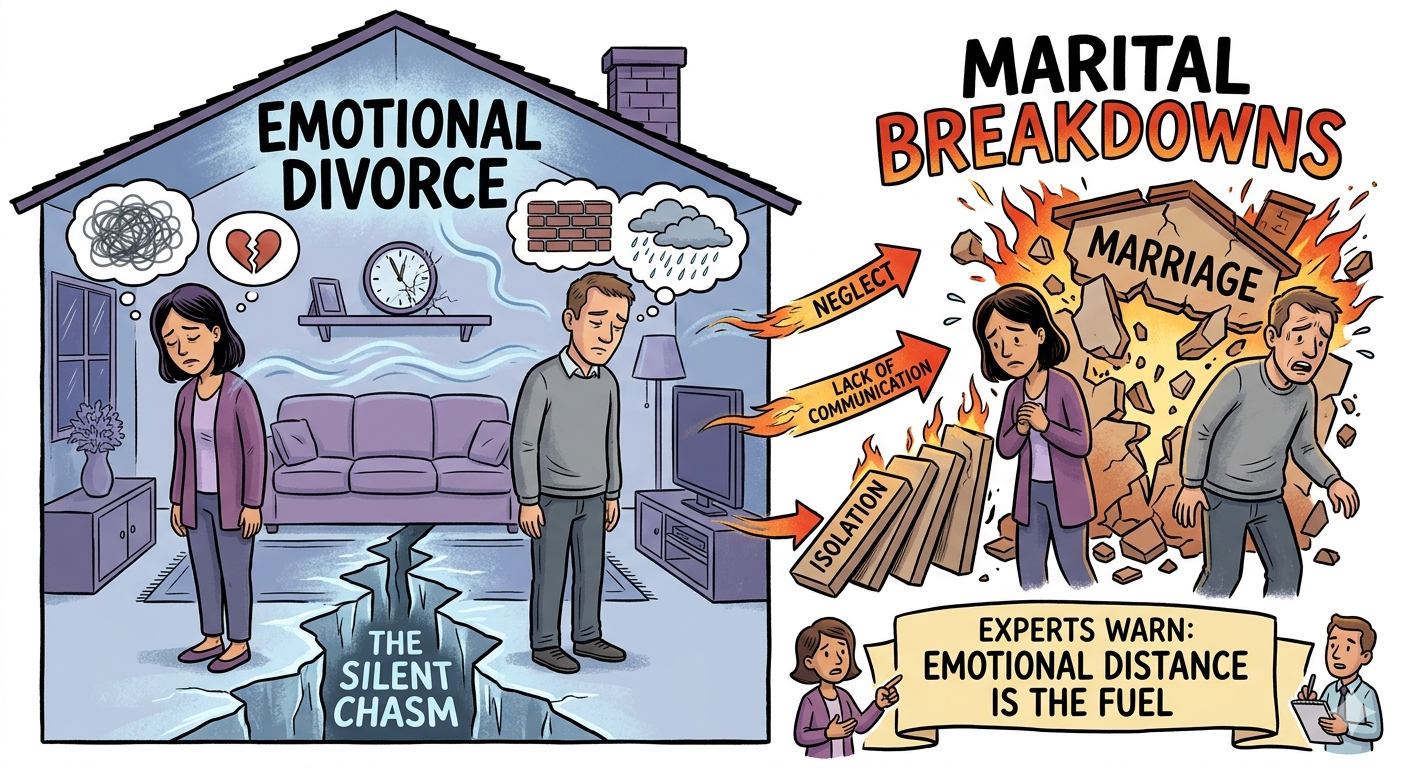
The concept of emotional divorce describes a situation in which spouses become emotionally disconnected, withdrawn, and detached from one another while remaining legally married. According to commentators, this silent separation often serves as the precursor to full marital breakdown.
Speaking on the issue, Omoba Awofeso Rasheed identified what he described as the five fundamental pillars of a healthy relationship: love, cohabitation, sexual intimacy, communication, and mutual care.
According to him, the absence of any of these elements can weaken the foundation of a marriage and create conditions for emotional distance.
“Where any of these is found missing, the foundation of the relationship will start having issues,” Rasheed said.
He also cautioned against entering marriage out of pity, sympathy, or external pressure, arguing that relationships built on such motivations often struggle to survive long-term challenges.
Rasheed further addressed misconceptions surrounding sexual orientation, explaining that it refers to an individual’s enduring emotional, romantic, or sexual attraction to others and is distinct from biological sex or gender identity. He noted that sexual orientation may be heterosexual, homosexual, bisexual, or asexual, describing it as an important aspect of human identity.
Offering a spiritual perspective, Taiwo Lasisi, President of the Ta’awun Humanitarian Forum in Lagos, stressed that while couples must invest effort into their relationships, lasting marital success requires divine guidance.
“No human is capable of handling any relationship without His intervention plan,” Lasisi stated.
He argued that factors often considered strengths in marriage, such as wealth, physical attractiveness, or influential family backgrounds, can sometimes become sources of conflict and ultimately contribute to separation.
Lasisi identified negligence as one of the leading causes of emotional divorce, explaining that feelings of neglect and emotional abandonment can create deep wounds within a relationship. He also highlighted prolonged physical separation between spouses as a major challenge, warning that extended periods apart can create opportunities for emotional disconnection and outside interference.
He further pointed to excessive influence from friends, relatives, and neighbours as another source of marital strain, stressing the importance of maintaining healthy boundaries. Incompatibility and the influence of negative associations were also cited as significant contributors to emotional detachment and marital instability.
To address these challenges, Lasisi advocated for a combination of spiritual commitment and practical relationship-building measures. He encouraged couples to seek divine grace, prioritize compatibility, meet each other’s emotional and physical needs, maintain physical closeness where possible, and surround themselves with supportive social circles.
“A man is determined by his company,” he noted, emphasizing that the people couples associate with can significantly influence the health and stability of their marriage.
The contributors agreed that marriage requires continuous investment, intentional communication, and emotional presence from both partners. They stressed that recognizing and addressing early signs of emotional disconnection remains one of the most effective ways to prevent marital breakdown and preserve healthy family relationships.
As discussions around emotional divorce continue to gain attention, experts say the message is clear: successful marriages are sustained not only by legal commitment but also by consistent emotional, physical, and spiritual engagement between partners.