
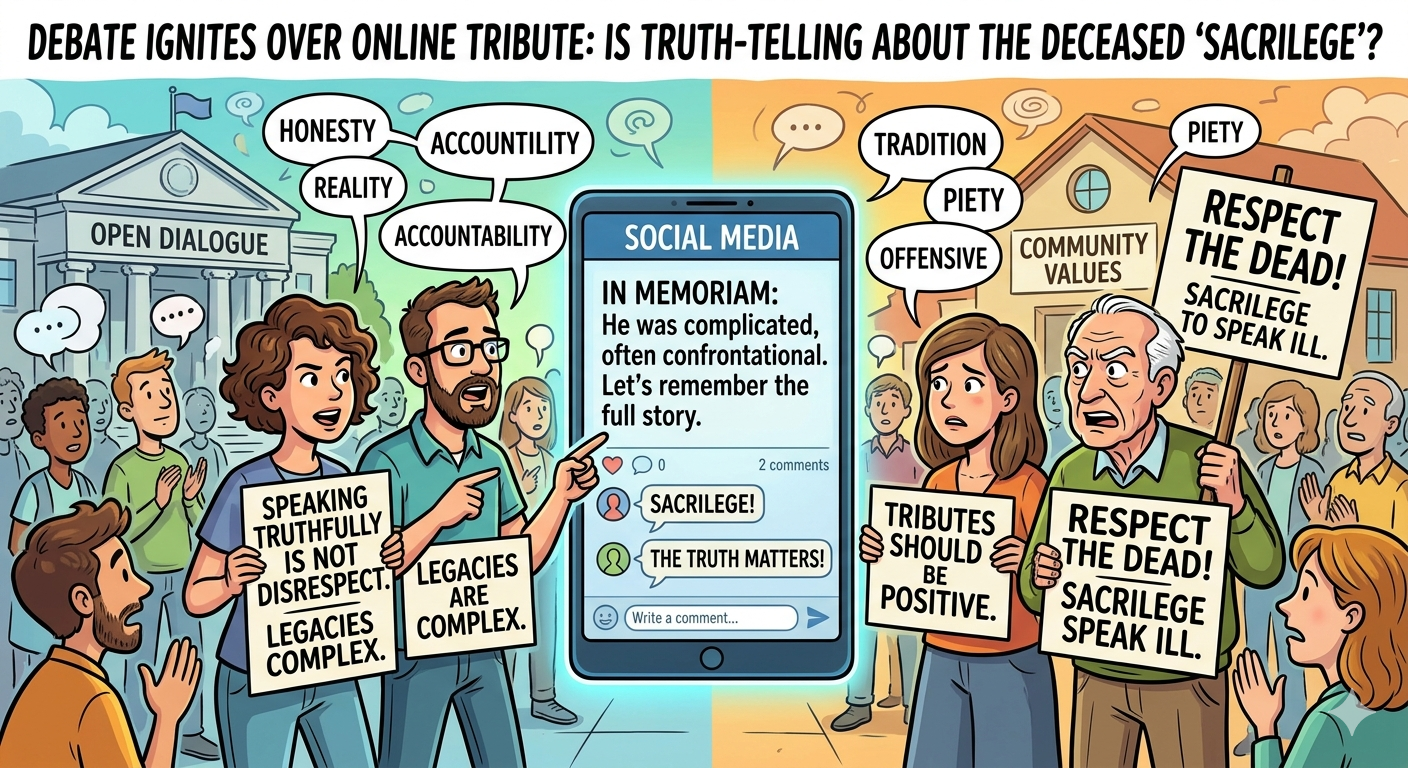
A social media post by prominent rights activist Inibehe Effiong regarding the death of a former youth leader has ignited a fierce debate regarding societal norms, the treatment of the dead, and the boundaries of public discourse.
The controversy centers on a post where Effiong recounted a personal experience from 2017. Upon hearing of the death of the former President of the Youth Wing of the Oron Union, Effiong recalled an incident at the Akwa Ibom State Liaison Office in Lagos. During a protest against the construction of a new Governor’s Lodge, the deceased allegedly led an attack against peaceful protesters and members of the press.
Effiong concluded his recollection with a sober reflection on the transience of life, offering a prayer for the forgiveness of the deceased’s transgressions.
While the post aimed to reflect on mortality, it sparked intense outrage from critics who labeled the public recounting of the incident as inappropriate. Many detractors argued that discussing the failings of a deceased person violates an unwritten social code that requires survivors to speak only in positive terms about the dead.
A Clash of Cultural and Moral Expectations
In a commentary piece released today, legal practitioner Tope Temokun addressed the backlash, characterizing it as a revealing snapshot of contemporary societal attitudes.
”Many people seem to believe that once a person dies, an unwritten African law suddenly comes into force requiring everyone to suspend honest judgment,” Temokun wrote.
Challenging the notion that negative truths should be silenced upon death, Temokun argued that neither cultural nor religious tenets—specifically citing the Bible—demand the erasure of a person’s public conduct or legacy.
”The dead deserve dignity,” the commentary noted. “They deserve sobriety. They deserve that we resist cruelty and needless malice. But they do not become immune from history.”
The Legacy Conversation
The discourse has prompted a broader discussion about how individuals should curate their lives while living. Temokun suggested that the focus of the current outrage is misplaced, arguing that the true lesson lies in the actions of the living rather than the narratives surrounding the dead.
”Perhaps the real lesson is not that we should never speak honestly about the dead,” Temokun concluded. “The real lesson is that we should live in such a way that when death eventually comes for us, as it surely will, the truth about our lives will be a blessing rather than an embarrassment.”
As the debate continues to unfold online, it remains a stark reminder of the tension between the desire to honor the departed and the commitment to historical truth.
Source: Commentary by Tope Temokun, June 8, 2026.